Chapter Two: Entertaining at 4D
Chapter Two of “Gus and Julia Bowe, Remembered”
As told by William J. Bowe, drawn from his January 29, 2021 interview with his cousin Tony Bowe.
Table of Contents
An Evening with Julia & Gus at 4D
Gus’s Brilliance: There’s Ibsen & Dickens, but then There’s the Gobi
Summary
This chapter follows Julia in the years after Gus’s death, when she moved into apartment 4B with Bill’s mother, and recalls a typical evening of entertaining at 4D — the ritual of drinks, dinner, and Gus’s running joke about serving guests gin disguised as Ecuadorian brandy. It describes Gus’s early brilliance and reading habits, a memorable dinner with Adlai Stevenson III and U.S. Senator Paul Douglas, and the circle of poets and Poetry magazine regulars who were frequent guests at 4D.
The Narrative
Entertaining at 4D
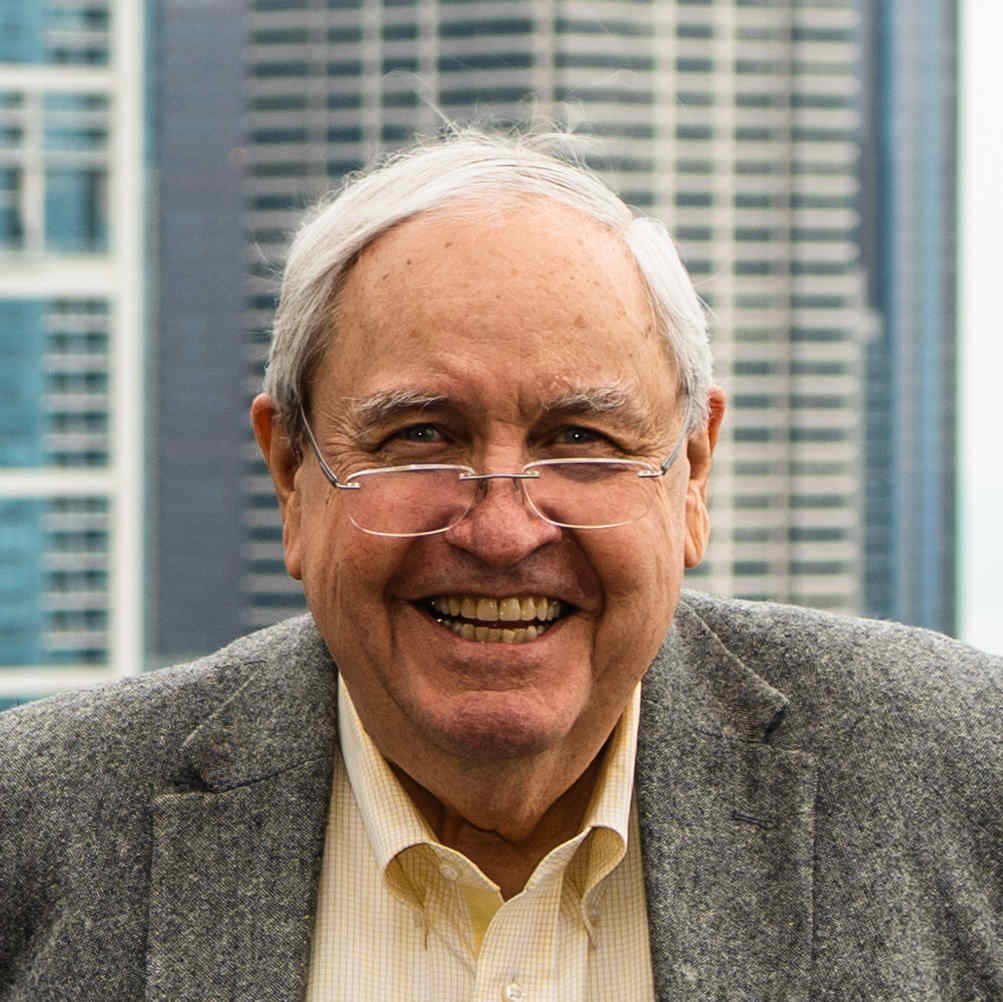
After Gus died in February 1966, Julia sold apartment 4D in 1120’s west elevator tier and moved back in with her old college roommate, my mother, into apartment 4B in the east elevator tier. When I got out of law school in 1967, I practiced law for a year before enlisting in the Army for three years. When I came back to Chicago on leave, I always stayed with Julia and my mother at 1120. It was in that period that I got to know Julia much better. She always went out of her way for me, and I came to appreciate more and more how brilliant she was in her own right, just as Gus had been in his. What I hadn’t realized before was that she also had command of the more traditionally female skills of her generation, like sewing. Without being asked, she and my mother took one look at the sorry bachelor apartment I was moving into and decided the poor boy needed help. Julia sewed me a beautiful Marimekko fabric bedspread, filled with bold colors.
An Evening with Julia & Gus at 4D
An Evening with Julia & Gus at 4D
I can describe an evening with Julia and Gus at 4D easily enough, as I enjoyed plenty of them. It usually began with hors d’oeuvres and a drink in the living room. Conversation always came first. Gus would be in his familiar chair in the corner, where he had a narrow, angled view of Lake Michigan and Oak Street Beach. This spot also gave him good light for reading. Julia would typically cook and serve a simple meat or fish meal. Afterward, it was back to the living room for a liqueur and an espresso. Gus had a standing joke he liked to play on first-time guests. He would offer them a liqueur after dinner and tell them it was a wonderful Ecuadorian brandy he was very fond of. Well, who’s going to turn that down? The clear liquid would always go down well, with the guest complimenting Gus on his fine Ecuadorian brandy. At which point, Gus would explain that he’d exaggerated a tad, and what he’d actually given them was a straight shot of gin. Guests always took it with a laugh.
Gus’s Brilliance: There’s Ibsen & Dickens, but then There’s the Gobi
Gus’s Brilliance: There’s Ibsen & Dickens, but then There’s the Gobi
Looking back, Gus was brilliant in a way I never fully appreciated while I knew him. He had risen to a significant elected position as Chief Justice of the Municipal Court of the City of Chicago. However, at my age at the time I wasn’t in a position to assess what that really meant. I’m in a better position now.
Gus had been a brilliant student growing up, unlike my father’s more routine academic life. Julia herself was an extremely capable, intelligent, well-educated person. Both had taken advantage of the Catholic educations available to them. My mother used to tell a story that when Gus was an altar boy at St. Matthew’s, the pastor thought he’d make a good priest and should head off to St. Ignatius. Gus and my father were living on Fulton Street then and had to walk to St. Ignatius at 12th Street and Blue Island, in good weather and bad. Along the way there was a library, and in the winter the boys would stop to get warm. And what do you do if you’re getting warm in a library? You read. That’s how Gus could tell people he’d read all of Ibsen by the time he was twelve. I believe it was true.
There’s a wonderful family portrait of Gus, Julia, John, and Julie Anne, up on my website, with Gus in that same favorite chair by the Elm Street window. He must have sat in that chair for the better part of four decades. Behind him, in a bookcase, was a full set of Dickens. There must have been a yard or more of volumes. Dickens was that prolific. Gus was always ready to hand out advice: “If you’re going to learn anything in life, you’ve got to read Dickens,” he’d say, waving his hand at the shelf. I believe he actually had read all of it, too. However, Gus was not as infallible as the Pope. I was with him once at a Loyola University fundraising dinner. At a table of eight, somehow the Gobi Desert came up. Gus, in his offhand way, announced, “Oh yes, that’s in North Africa.” A priest at the table had the strength of character to correct him: “No, Judge Bowe, it really is over in Mongolia, in East Asia.” “Oh, no,” Gus said, insistently. “The Gobi Desert is in Africa.” He would not be moved or permit the Gobi Desert to be moved.
Gus’s success in the law practice, first with my father, then with their cousin John Casey, and finally with Gus’s own son John, was built on intelligence and hard work from the start. Back then, higher education wasn’t the four-years-of-college-then-three-of-law-school sequence it became for my own generation. It was compressed. Gus was born in 1892 and had his law degree and license by 1913, at twenty-one. My father was two years behind him and was out of law school by 1915. By 1917, remarkably, Gus was selling Liberty Bonds for the war effort and teaching torts at the same law school he had just graduated from. In Loyola’s medical school, he was teaching medical jurisprudence.
Following Dickens in Gus’s Footsteps
Dinner with Adlai Stevenson III and U.S. Sen. Paul Douglas
U.S. Sen. Paul Douglas
One of the most memorable dinners I ever had with Gus and Julia at 4D was the night they had invited me to join their son John and his wife Kathie and Adlai Stevenson III and his wife Nancy. The son of the former presidential candidate was running for statewide office in Illinois, as his father had before him. Gus and Julia had invited us to dinner for the express purpose of meeting United States Senator Paul Douglas and his wife Emily for the first time. I had just finished reading a biography of Chicago Mayor Anton Cermak, the man killed when an assassin’s bullet meant for Roosevelt struck him. I thought there might be some conversation about old Chicago politics at dinner, so I took it along. There wasn’t any talk of the old politics. It was all talk of current politics. Going down in the elevator afterward with Senator Douglas and his wife, the Senator noticed the book under my arm and asked about it. I quickly gave it to him and said he’d find it fascinating if he ever had the time to read it. I then hurried back up on the other elevator tier to excitedly tell my mother about the exciting dinner and my selfless gift.
There were many dinner regulars at 4D, and a good number of them were connected to Poetry magazine. Harriet Monroe had founded the journal in 1912, and after her death in 1936 it nearly died along with her. It only survived because Gus and Julia formed an organization to save it. In their living room the Modern Poetry Association was formed as the vehicle to keep Poetry alive. Gus and Julia called everyone they knew who might help out, and were able to raise enough money to keep the magazine alive through the 1940s and ’50s. Their old friend Patrick Lannon, whom they knew from summers spent together in the Chicago suburb of Palos Park, was a particularly generous supporter over the years.
One poet who stayed with Gus and Julia for a week during a fundraising campaign and poetry reading had brought along a documentary film about the poet William Butler Yeats. He was hoping to sell the documentary movie to Encyclopaedia Britannica Films. I recall driving him up to the Britannica Film offices in Wilmette to screen it. The Britannica executives passed, but the way they delivered the “no,” wrapped in so many layers of politesse you had to listen closely to hear it, stuck with me. Strangely enough, I became General Counsel of Encyclopaedia Britannica myself in 1986, and for a period was also president of Encyclopaedia Britannica Educational Corporation, EB’s film distribution subsidiary, and found that the same talent for making “no” sound like “yes” was still part of the place’s DNA decades later.
Other regulars at 4D included Henry Rago, Poetry magazine’s editor, a Catholic priest and family friend, Father Don Temple, and the poet and translator John Nims. Nims later wrote the preface to the posthumously published book of Gus’s poetry, No Gods Are False. Also present from time to time before he moved down to Palm Beach, Florida was Patrick Lannon. I also remember meeting the poet James Dickey at 4D. He was more famous for being the person who wrote the novel Deliverance that was later turned into the successful Burt Reynolds movie. Dickey was in town for a Poetry reading, and was a most engaging bon vivant.
Saving Poetry Magazine and Entertaining Visiting Poets at 4D
← Previous: Chapter One · All eight chapters and the video record · Next: Chapter Three →