Chapter One: Getting to Know Gus and Julia
Chapter One of “Gus and Julia Bowe, Remembered”
As told by William J. Bowe, drawn from his January 29, 2021 interview with his cousin Tony Bowe.
Table of Contents
Summary
This chapter introduces Gus and Julia Bowe through Bill Bowe’s memories of growing up in their extended family’s orbit at 1120 Lake Shore Drive. It traces how Julia and Bill’s mother met as roommates at Trinity College, how the family came to share apartment 4D under the strong hand of Gus’s mother, Ellen Canavan Bowe, and what Bill came to understand about Gus’s character through the words “decent” and “competent.” It also covers Julia’s own wide-ranging intellectual life, the generational gap that limited Bill’s years with Gus and Julia as an adult, and two trips they took together: a Paris vacation and a day spent touring every home the Bowe family had lived in around Chicago.
The Narrative
The Bowes Together at 1120
The Bowes Together at 1120
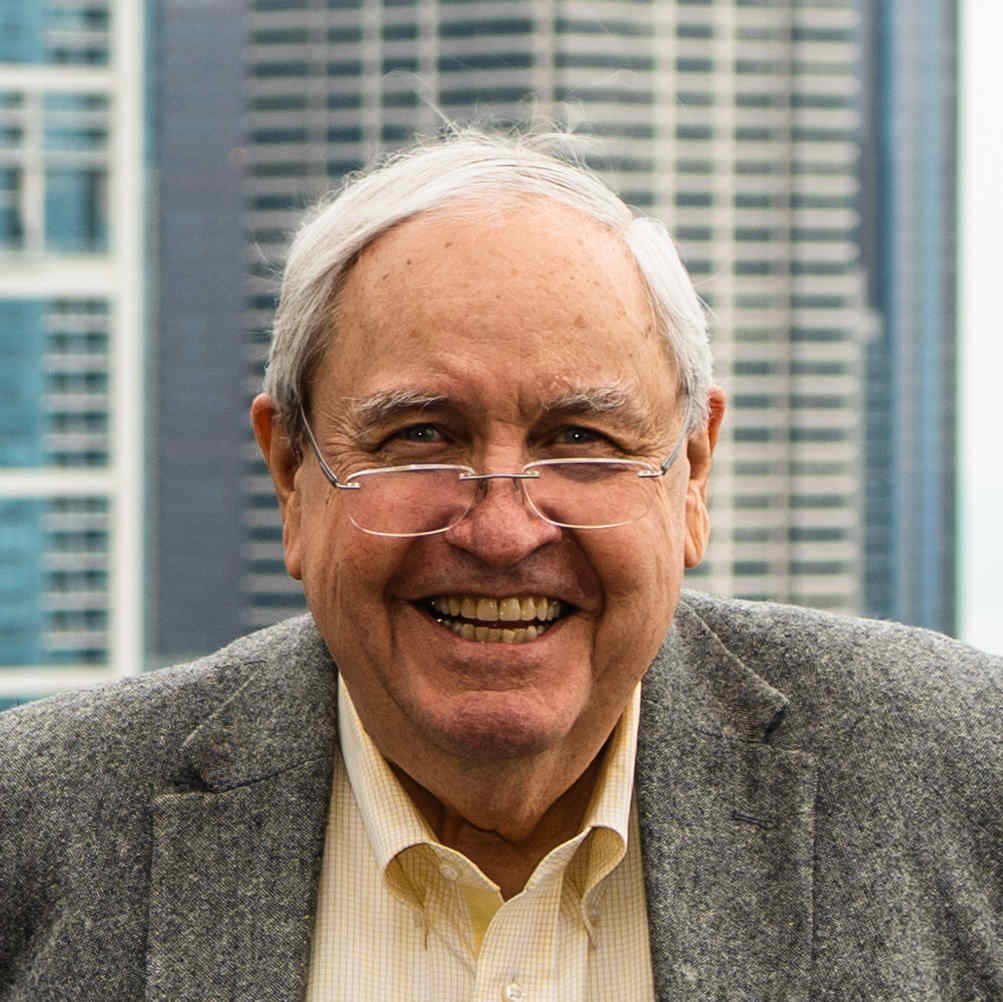
My father’s brother, Augustine Joseph Bowe, was the role model who mattered most to me growing up. His wife, Julia Lecour Bowe, and my mother, always called him Gussie, but he was Gus to me and most everyone else who knew him. As it turned out, it was Gus who most shaped how I thought about how to live my adult life as I followed my father and Gus into a professional life much like the ones they had built for themselves.
To understand this, it helps to start with the apartment on Elm Street in Chicago that I grew up in. Gus’s wife Julia and my mother had both gone to Trinity College, a Catholic women’s school in Washington, D.C. They both graduated in the class of 1923, an era when not many women went to college. During their school years, Julia had a chance to visit my mother’s family in nearby Baltimore. I still have pictures of Julia there with my mother’s sisters, Betty, Martha, and Nancy Gwinn. When Julia came back to Illinois and pursued a relationship with her distant cousin, Gus, and they married, it followed naturally enough that her old roommate would eventually meet my father, Gus’s brother William John Bowe.
What really bound the Gus and Bill Bowe families together was Ellen Canavan Bowe, Gus and my father’s mother. She was quite a figure, no shrinking violet, and her will was not to be denied. She had raised the boys in their youth as a single mother in an Irish immigrant neighborhood in Chicago’s near West Side. Out of school, they had quickly turned out to be successful lawyers. It was payback time for Ellen, and she made sure she was going to be taken care of properly.
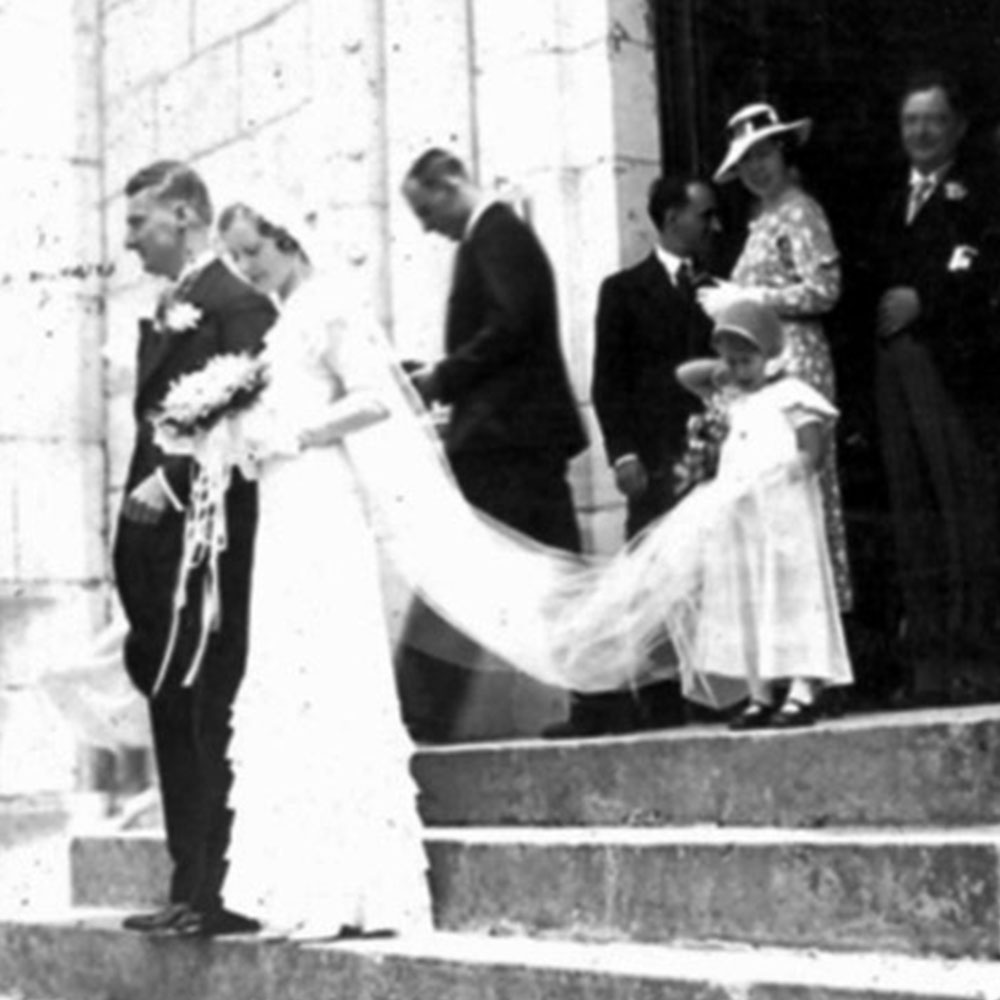
So when Julia married Gus, in 1926, Julia found herself moving the following year into the newly built 1120 Lake Shore Drive, apartment 4D. At the time, this was where Gus’s mother, sister Anna and Gus’s brother, my father, were already living. All of them were initially smashed together in 4D.
After my mother came to visit Julia and fell in love and married my father, where did they first live? Well, that was too much even for 4D. It was a nice duplex apartment, but it had already been stretched to its limit. Still, the brothers were close, and they already were living together and working in their Bowe & Bowe law firm together. So, with Ellen in effect calling the shots, my parents bought their own apartment in 1120 Lake Shore Drive. The only real breach in togetherness of the families was that the Mary and Bill Bowe’s apartment was on the east, not the west, elevator tier of the 18-story building.
Gus Bowe: Decent, Competent and a Refined Common Sense
Decent, Competent
I remember once over lunch at The Cliff Dwellers my cousin, Gus and Julia’s grandson Tony Bowe, asked me what kind of person Gus was. I said he was a particularly competent person. It’s worth explaining what I meant by that, because it says as much about how Gus himself saw the world as anything else I could tell you about him.
“Competent” was a word Gus used as a high compliment when he was talking about someone else. There was another word he leaned on too: “decent.” “Well, so-and-so, he’s very decent.” “She’s very decent. They’re very decent people.” Competence and decency were at the top of his hierarchy of human value. Decent was the word that gathered up moral values, whatever spiritual values there were or weren’t, and mostly it had to do with how a person dealt with other people and with the world around them. Decent and competent, that’s how I think about Gus. He commanded such a broad intellectual range of subjects in such a straightforward manner that it struck me as the fairest way to sum him up.
I remember when I was starting out in the practice of law briefly thinking: “So, this is what I’ve ended up doing with my life. Gus and my father are to blame.” I had a brief moment of wondering how I had ended up on this path as a lawyer at all. I used to joke at the time that I’d been tricked into it, and that the problem with practicing law was clients were always asking you to work on their problems, not your own. But that brief second guessing of my career choice quickly evaporated.
That gets back to the competence question. What is a competent lawyer really selling? In my mind, it’s nothing more than a refined common sense. We live in a world awash in uncertainty, and there are lawyers because conflict is natural to life, and it’s better to resolve a dispute in a civil system than with a blow to the head. It’s sensible that we built a system for that. So, what does it take? An overload of common sense, mostly. It isn’t much, and there are plenty of competent people around. But that’s Gus in a nutshell: decent, competent, with a highly refined common sense and consistently good judgement.
With this background, I quickly found myself thoroughly enjoying my work as a lawyer. I also set my mind to make myself a highly competent one, who also took people as they came, just as I observed Gus and my father doing.
Julia without Gus
Julia
Julia deserves to be known on her own account, not only through Gus, especially for the years after he died.
Julia was a remarkable woman. She wrote a book, The Generations, tracing her family’s history from France and French Canada down to Kankakee County, Illinois. There is real history in it, too. She includes material on the Potawatomi tribe being displaced to Council Bluffs, Iowa, from along the Kankakee River. They had settled there after the Treaty of Tippecanoe in 1832. You can see the scholar in Julia throughout The Generations.
Julia was interested in everything in much the way Gus was. I remember that later in her life, after her own children were grown and out raising their own families, Julia took up the guitar. She started Spanish classes at Loyola in her senior years, because she wanted to read the Spanish poet Garcia Lorca to get closer to his poetry than any translation could take her. When the Dead Sea Scrolls were the subject of a great deal of excitement in the late 1940s, she took up Aramaic, or a derivative of it, wanting a better feel for their meaning. Though I don’t think she was ever going to attempt any serious translation herself, she was quite remarkable in her interests.
She was also head of the Modern Poetry Association. That wasn’t a ceremonial role. Gus had plenty else to occupy him. She ran it herself, and she was a real motive force, along with Gus, in saving Poetry magazine, before it was later put on a firm footing by the grant from the Lilly heiress. Later in life she just kept up a remarkably broad set of interests.
Julia Bowe: Scholarly and a Savior of Poetry Magazine
John and Julie Anne: Ships Passing in the Elm Street Night
A Gap of Years
Here is a curiosity of fate, in terms of how I came to know them at all. Because of the age difference, I was never close, as a child, to Gus and Julia’s own children, my first cousins John Edward Bowe and Julie Anne Bowe, though we are in the same generation. My brother Dick was born in 1938. I was born in 1942. However, John Bowe was born in 1928, fourteen years ahead of me, and Julie Anne was born in 1931. Gus and Julia were mostly finished raising their own children by the time I came along; I missed watching them grow up. John was on his way out of Latin School, class of 1946, while I was still just arriving at kindergarten.
I graduated from college in May or June of 1964, and my father and Gus were both gone by February of 1966. So however it might look from a distance, the years I actually had to get to know Gus and Julia as an adult were surprisingly short.
Paris with Julia and Gus
Paris
I did have a wonderful European adventure with Gus and Julia. In the early 1960s I was in Paris visiting my aunt Nancy Gwinn Riboud and her family. Gus and Julia happened to be there on vacation too. They were exploring their old haunts in Paris in their days as young marrieds getting away from it all. They knew Paris well, and they asked if I would like to join them while I was there and motor them around. I found myself chauffeuring them about Paris in a little rental car.
The first stop was the real point of the trip, as far as they were concerned. When they visited Paris as young marrieds, they always stayed at the St. James Albany Hotel. It’s right on the Rue de Rivoli, a major street between the Place de la Concorde and the Louvre Museum. For all their visits, they had a favorite room, and not one of the ones facing the noise and action on the Rue de Rivoli, but an interior room on a courtyard. They talked the hotel into letting them have that same room again, with its French doors opening onto the courtyard. It was marvelous, and I could see why they enjoyed it so much.
They knew a fellow from Chicago living in Paris, Tony Pavelich, who had been a Yugoslav diplomat or consul of some sort and had married a woman named Mary Ann Smith. He invited Gus and Julia to dinner, and graciously added me as a guest. What a meal at the high end Place des Vosges restaurant. It was really unforgettable. At my age, I had never experienced anything like it: a complete multi-course dinner, exotic fare, great conversation, and afterward a box of cigars to choose from, followed by espresso and a liqueur. It was a thoroughly first-rate event.
It was followed, however, by one moment of pure embarrassment, entirely mine. I was driving our little rental car, with Julia and Gus in the back seat, and I came into the Place de la Concorde and made a wrong turn. This was right in front of a gendarme. I don’t remember whether I was properly licensed for international driving, but I certainly had my Illinois license. I thought I would play the sympathy card, so I rolled down the window, and said, “Je suis très triste.” I meant it as “I’m sorry.” At first that didn’t seem to work. Then the gendarme broke into a wide grin, and I heard Julia stifling a laugh in the back seat. He waved me on, and I drove off and asked her what that had been about.
“Well,” she said, “I don’t think you realized it, but what you said to him wasn’t I’m sorry. It was I am so sad.”
Julia would be the one to catch that. She had grown up in a French family, the Lecours in Kankakee, Illinois, though French was not actually spoken at home. Her father was French, but he had married Mabel Canavan, and her and her sister Josephine (“Dodie”) the household, ran in English. Julia learned her French from an aunt nearby who gave her lessons.
She talks a little in her book, The Generations, about the discrimination some Kankakee County families with French accents faced. This was mainly people who had come straight from France or French Canada. Julia herself never experienced any of that, coming from an accent-free home. I should add one more thing about Julia and languages: it was Ellen Canavan, Gus’s mother and Julia’s mother-in-law, an Irish descendant, who encouraged Julia to pursue recording her French heritage in the first place. Julia herself said she would never have written The Generations, the scholarly genealogy she worked on with one of her Lecour relatives, without that encouragement.
Paris Haunts: The St. James Albany Hotel
Driving Gus and Julia Down Bowe Memory Lane
Down Bowe Memory Lane
That same year, or close to it, in 1965, Gus and Julia and I took another kind of trip together, this one much closer to home. I had been talking with them about the Bowe family’s history, and they could see I was interested in it. They were at an age themselves when they were looking back over the years. So, we came up with the idea: they would pile into the back of my Volkswagen, the one I had bought secondhand to commute down to the University of Chicago Law School, and for a day, starting on a Saturday morning, I would drive them in sequence to every residence Gus and my father’s family had lived in since birth.
The first stop was 1239 North Ashland Avenue, where Gus was born. I have a photograph of Gus and Julia standing in front of that building in 1965. It had been an Irish immigrant neighborhood long before, but by the time we stood looking at it, the ground floor held a shop sending gift parcels back home to Poland, the second floor carried signage for an insurance agent and a notary public, and up and down the rest of Ashland Avenue the signs were in Spanish. It struck me as something of a microcosm of Chicago: neighborhoods can completely turn over as one group moves in and another moves out.
The next stop was 2441 West Superior Street, where Gus’s sister Anna was born. Both Gus and Bill had been born on Ashland. Then it was to the west of the Loop at 2852 West Fulton Street. After that came 2946 West Walnut Street, notable because Frank Lloyd Wright’s famous Francisco Terrace apartments stood nearby. This landmark apartment building was destroyed not long after our trip, so we were lucky to get a look while we still could. After the turn of the century the Bowe family moved again, this time to an apartment near Fulton and Albany. Then it was on to 3220 West Fulton Street, which they must have been fond of since they kept the same parish church, likely St. Matthew’s, through all of this period.
That house on Fulton Street was the first home the family owned rather than rented. They were only able to afford it because Gus’s and Bill’s mother, Ellen, had inherited a bequest from the estate of Ellen’s mother, Ann Hughes Canavan, the widow of fellow Irish immigrant Anthony Canavan. Their family had prospered as farmers in Kankakee County, and the inheritance happened to come at a moment when the family badly needed it.
All eight chapters and the video record · Next: Chapter Two →