Chapter 4: Jazz Age Chicago, 1901–1950
A City Remaking Itself
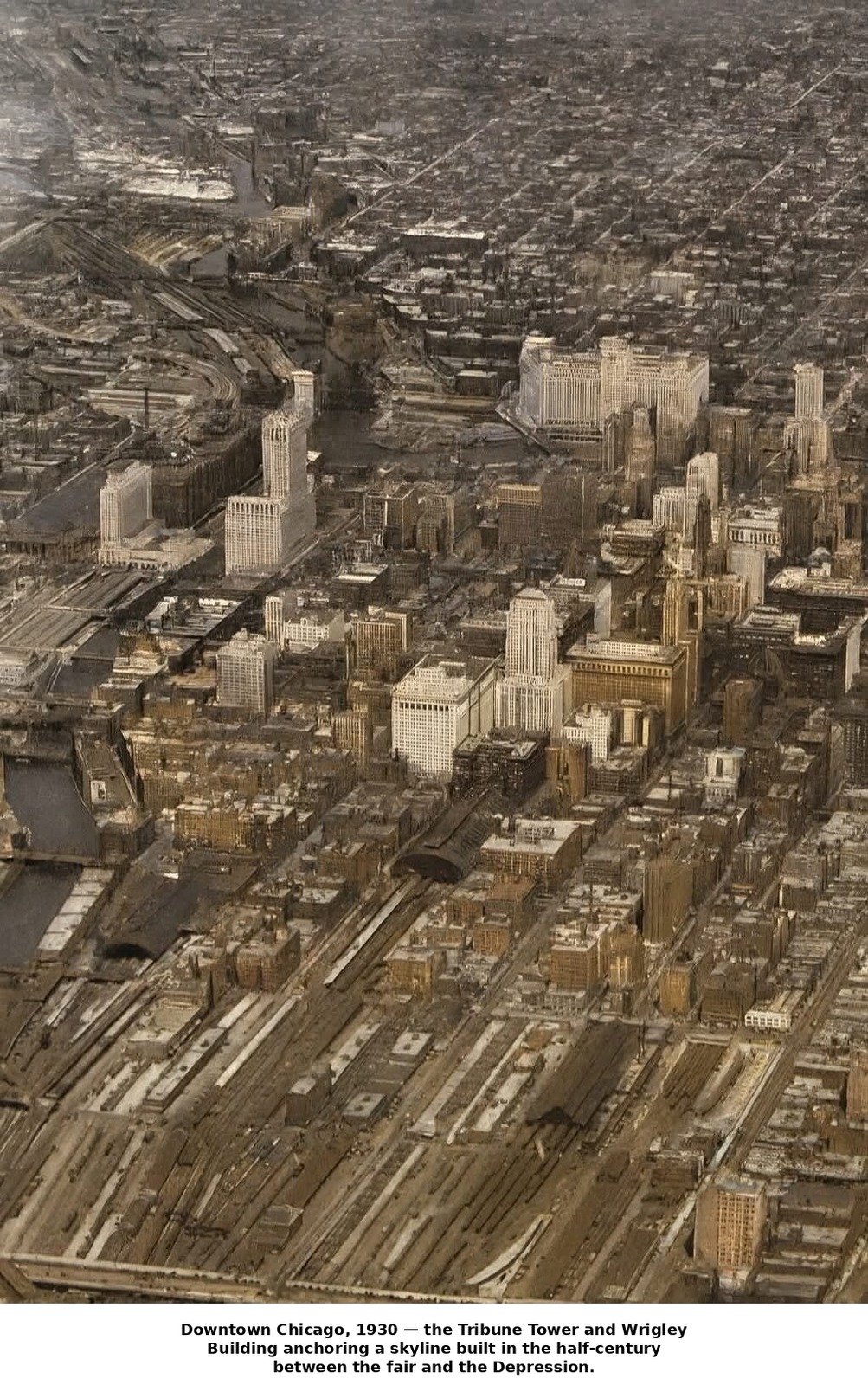
By the turn of the twentieth century, Chicago had already rebuilt itself once, after the fire of 1871, and had shown the world its ambitions at the 1893 World’s Columbian Exposition. But the city that emerged in the first half of the new century was something different: bigger, richer, more violent, more creative, and more racially divided than anything the early settlers could have imagined. In the space of fifty years Chicago went from a booming rail and stockyard town of prosperous chaos to a metropolis that gave America its first comprehensive city plan, its most notorious gangster, some of its greatest poets and novelists, and one of its ugliest race riots. In 1920 George Halas, a Chicago boy who had played for the University of Illinois, helped found the league that became the NFL. He brought his team, the Decatur Staleys, to Chicago the next year and renamed them the Bears in 1922. “Papa Bear” owned the team for more than sixty years and coached it to six league championships. By 1945, Chicago had become one of the arsenals that helped win a world war. Few American cities changed as much, or as fast, as Chicago did between 1901 and 1950.
Burnham’s Plan and “No Little Plans”
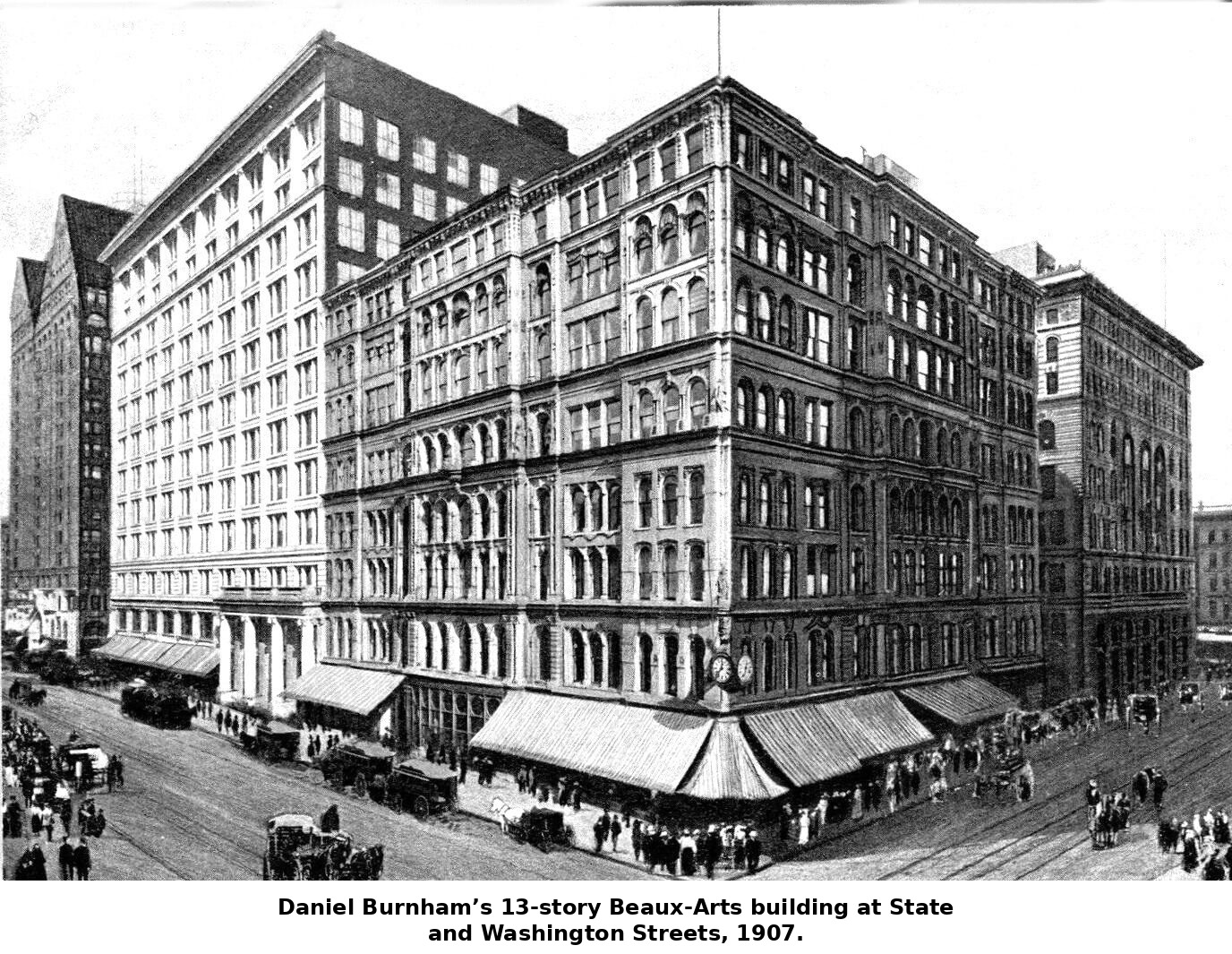
In 1909, the architect Daniel Burnham was fresh off his triumph as director of works for the Columbian Exposition when he published the Plan of Chicago with his collaborator Edward Bennett. Under the sponsorship of the Commercial Club of Chicago, it was the first comprehensive plan for the physical development of any American city. It imagined Chicago transformed. There would be a continuous public lakefront free from railroad yards and private industry. There would also be a system of forest preserves ringing the metropolitan area, wide diagonal boulevards cut through the existing grid, a monumental civic center, and a unified harbor and highway system tying the whole region together.
Burnham is remembered for a phrase urging planners to “make no little plans,” since little plans lack the magic to stir men’s blood and probably will not be realized. Chicago’s lakefront, kept largely free of private development from Jackson Park to Lincoln Park, and threaded by Lake Shore Drive, is the most visible Plan legacy. Grant Park, the Museum Campus, Navy Pier, and the region’s forest preserve system also all trace their lineage to Burnham and Bennett’s vision. However, the plan’s grander schemes for a monumental civic core were never built as drawn. The Plan of Chicago mattered less as a literal blueprint than as a demonstration that a modern industrial city could think of itself in generations rather than in real-estate cycles. Other American cities studied it as a model for the City Beautiful movement for decades afterward.
Chicago’s own sculptor Lorado Taft gave that same City Beautiful ideal its most enduring physical form. Trained in Paris and based for decades at his Midway Studios near the University of Chicago, Taft filled the city’s parks with monumental public sculpture. These included the Fountain of the Great Lakes (1913) outside the Art Institute. The Fountain of Time (1922) on the Midway Plaisance was a hundred-foot frieze of humanity marching past a hooded, watching figure of Time itself. Taft’s student and studio assistant Leonard Crunelle carried the same civic-sculpture tradition into war memorials and public statuary across Chicago and downstate Illinois.
Filling In the Lakefront: From Fire Debris to Grant Park

The lakefront that Burnham’s plan celebrated as Chicago’s great civic space was, quite literally, built rather than found. Little of what is now Grant Park existed as dry land before the Great Fire of 1871. Debris from the burned city was dumped along the shoreline east of Michigan Avenue in the fire’s aftermath, and the practice continued for decades afterward as construction rubble, ash, and lakefill steadily pushed the shoreline eastward.
The mail-order magnate Aaron Montgomery Ward, whose State Street warehouse overlooked the park, filed a series of lawsuits between 1890 and 1911 to block the city and private interests from building on the new ground. He invoked language dating to an 1836 canal-commissioners’ plat that had designated the lakefront “Public Ground, Forever to Remain Vacant of Buildings.” Ward’s four suits, largely successful, kept Grant Park free of permanent structures and gave Burnham and Bennett’s 1909 plan a genuinely open civic lawn to formalize rather than invent. Landfill continued to add acreage through the 1920s, as the Field Museum of Natural History (1921), Soldier Field (1924), and, just south of the park, the Adler Planetarium and Shedd Aquarium (both 1930) rose on newly created ground, forming what became known as the Museum Campus.
A few blocks north, an entirely unofficial variety of landfill was underway. After schooner captain George Wellington Streeter ran his boat aground on a sandbar off the Near North Side lakefront in 1886, he and later opportunistic developers spent years dumping construction debris around the wreck. They gradually enlarged it into inhabitable ground that Streeter claimed as his own “District of Lake Michigan,” free of Chicago’s jurisdiction. Decades of litigation eventually fixed the reclaimed land’s ownership with the city and established developers. By the 1920s the former sandbar had become Streeterville, the dense high-rise district that still bears the captain’s name.
Locking the River to the World
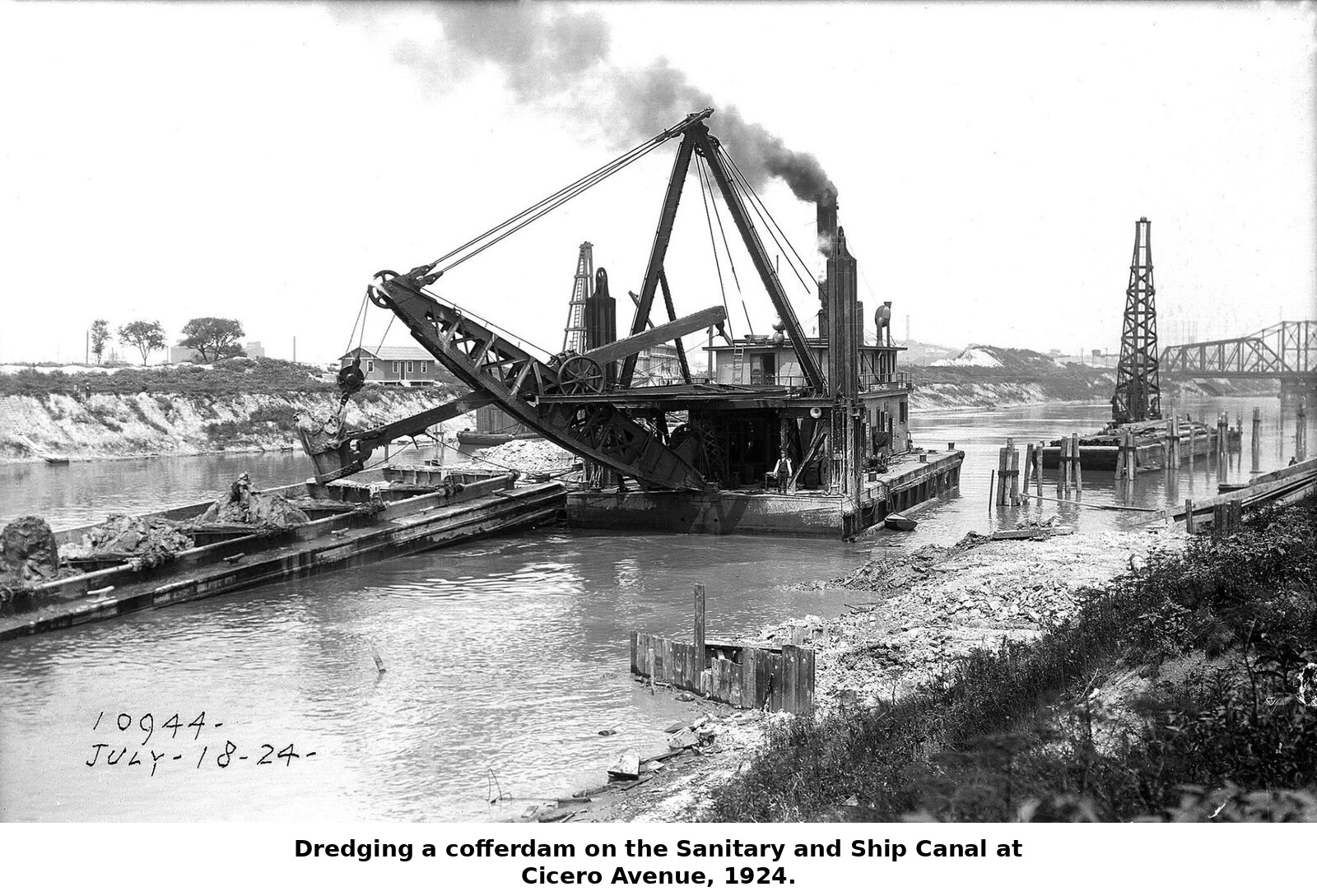
The 1900 reversal of the Chicago River had solved Chicago’s sewage problem, but it created a new problem. With the River now flowing permanently away from Lake Michigan, the Sanitary District had to keep careful control over exactly how much lake water was diverted down the new channel. Too much diversion threatened lake levels and navigation across the entire Great Lakes system, and a dispute drew Chicago into decades of litigation with rival lake states eventually reaching the U.S. Supreme Court. The Sanitary District answered part of the problem between 1936 and 1938 by building the Chicago Harbor Lock at the river’s mouth. A gated control point there let ships pass between the lake and the reversed river, while limiting how much lake water could slip through.
Further downstream, the federal government completed the Lockport Lock and Dam in 1933. A chain of companion locks followed at Brandon Road, Dresden Island, Marseilles, and Starved Rock. This finished the Illinois Waterway and gave Chicago a fully lock-controlled water route running all the way from Lake Michigan to the Mississippi River. The old nineteenth-century lumber district along the South Branch had mostly faded by this point. Its trade was increasingly carried by rail. But the locks and the Sanitary and Ship Canal kept the river corridor busy with a new generation of industry, including coal docks, and grain elevators. Along the Calumet River to the south, steel mills and shipyards would define the region’s heavy industry for the balance of the century.
The Great Migration and the Making of Bronzeville
While Burnham was reordering Chicago’s lakefront on paper, a much larger transformation was underway in its neighborhoods. It began around 1916, and accelerated sharply once World War I cut off the flow of European immigrant labor to Chicago’s factories and stockyards. Tens of thousands of Black Southerners began arriving in Chicago in what became known as the Great Migration. They came mostly by rail, with many of them following the Illinois Central line north from Mississippi, Alabama, Louisiana, and Tennessee. They were drawn by wartime industrial jobs, the campaigning of the Chicago Defender newspaper, and the hope of escaping Jim Crow segregation and the sharecropping economy of the rural South. Chicago’s Black population, roughly 44,000 in 1910, more than doubled within a decade.
Because of restrictive real estate covenants, hostile white neighborhood associations, and outright violence against Black families who tried to move beyond a narrow strip of the South Side, the newcomers were channeled into an increasingly crowded corridor along State Street that became known as the “Black Belt.” It later more proudly became known as Bronzeville. Within that constrained geography, Black Chicagoans built an extraordinary self-sufficient world of churches, businesses, newspapers, insurance companies, and nightclubs, even as many of the city’s businesses and institutions remained closed to them.
Bessie Coleman came up from Texas in 1915 and worked as a manicurist on the South Side. Turned away by every American flight school because she was Black and a woman, she learned French, and with encouragement from the Defender’s Robert Abbott, went to France. In 1921 she became the first Black woman in the world to earn a pilot’s license. “Queen Bess” died in a crash in 1926.
That self-sufficient world found its most enduring literary voice in the poet Gwendolyn Brooks. She grew up on these streets and in 1945 published A Street in Bronzeville, a collection that turned the neighborhood’s kitchenette apartments and hard-pressed lives into art. Five years later she became the first Black writer ever awarded the Pulitzer Prize, for Annie Allen, a recognition of both her own gifts and the community that had shaped them.
The 1919 Race Riot
The pressures of rapid migration into a hostile and overcrowded housing market, competition over jobs and union membership, and returning Black veterans who had fought for democracy in Europe only to face discrimination at home, all came to a head in the summer of 1919. The time was remembered nationally as the “Red Summer” for the wave of political and racial violence that swept American cities. In Chicago the spark came on July 27, when a Black teenager named Eugene Williams drifted on a raft across the invisible but strictly enforced line separating a segregated stretch of the Lake Michigan shoreline near 29th Street. White beachgoers threw stones at him and he drowned.
When police refused to arrest the man witnesses identified as responsible, violence erupted and spread through the South Side and the stockyards district. For roughly a week, white mobs, some organized around ethnic “athletic clubs,” attacked Black residents and burned homes. Retaliatory violence also occurred, and the Illinois militia was eventually called in to restore order. When the riot ended, thirty-eight people were dead, fifteen white and twenty-three Black, with over five hundred injured and roughly a thousand families, mostly Black, left homeless after their houses were burned.
The following year, Illinois Governor Frank Lowden appointed the Chicago Commission on Race Relations, an interracial body of civic leaders, to investigate. Its 1922 report, “The Negro in Chicago: A Study of Race Relations and a Race Riot,” ran to more than six hundred pages and remains a landmark document. It methodically traced the riot’s causes to housing discrimination, labor competition, and unequal policing. It also documented in painstaking detail the conditions Black Chicagoans faced in employment, education, and public life. It was among the first attempts by any American city to officially reckon with the structural causes of racial violence rather than treat it as an isolated outburst.
Prohibition, Capone, and the Business of Crime
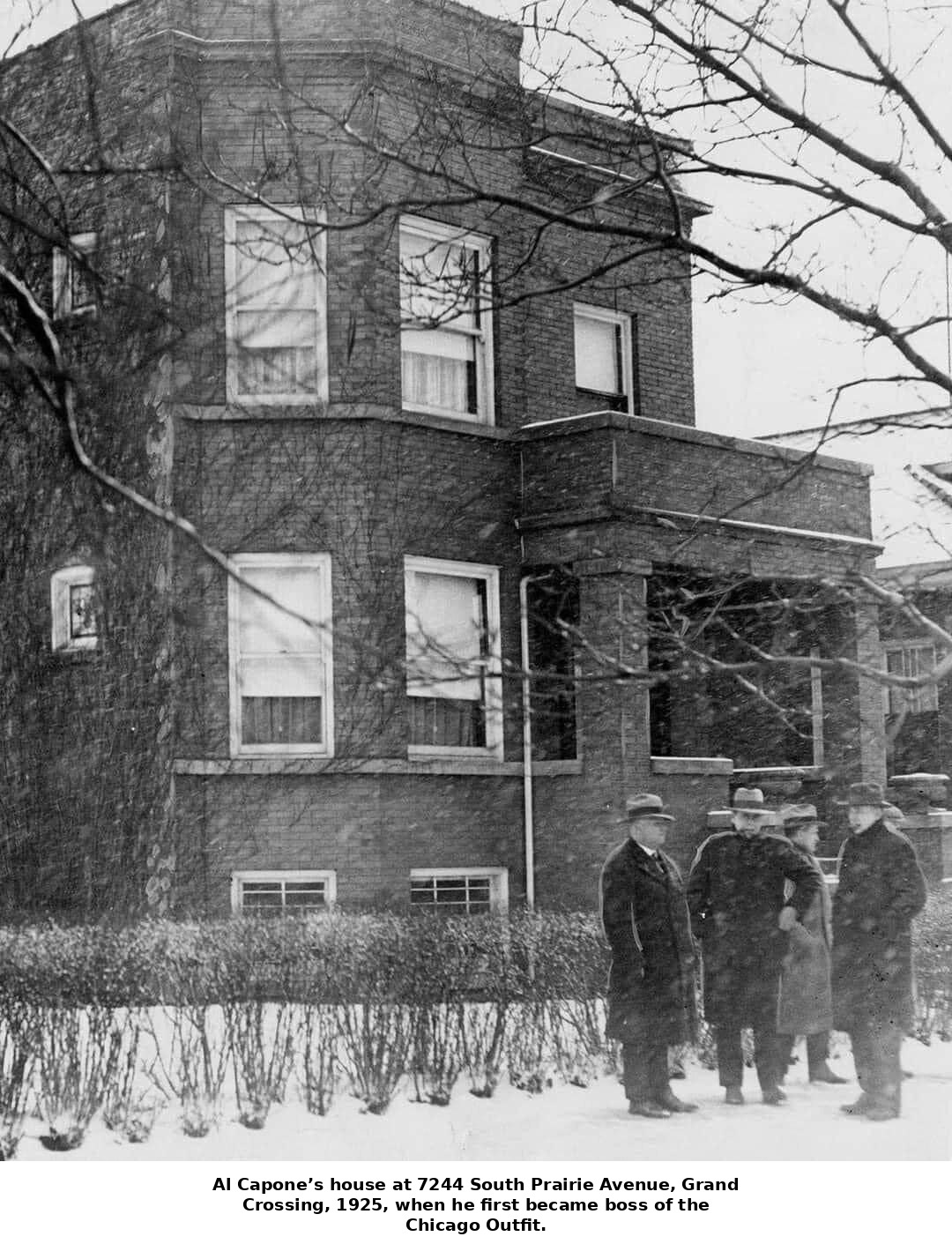
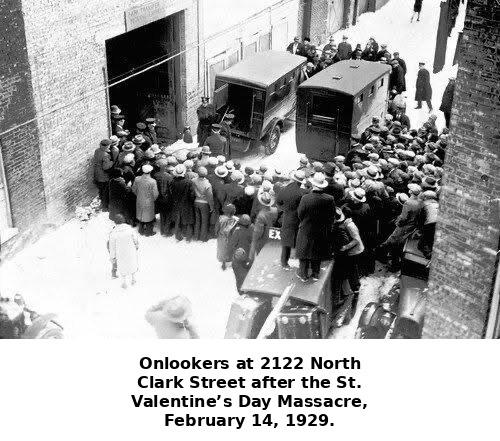
National Prohibition, in force from 1920 to 1933, turned Chicago into the country’s most notorious showcase of organized crime. The Volstead Act did not stop Chicagoans from drinking. It simply moved the liquor trade into the hands of bootleggers willing to bribe police and politicians and to fight rivals for control of speakeasies, breweries, and distribution routes. Al Capone, who arrived from Brooklyn to work for gang boss Johnny Torrio in the early 1920s, took over the operation when Torrio retired after being wounded in 1925. Capone built the most sophisticated criminal enterprise of the era, with estimated annual revenues in the tens of millions of dollars from alcohol, gambling, and prostitution. Capone cultivated a public image as a folk hero and philanthropist, even as his organization fought a running gang war with North Side rivals led first by Dean O’Banion and then by George “Bugs” Moran.
That war reached its grim climax on February 14, 1929, when gunmen dressed as police officers lined up seven members of the Moran gang against a garage wall on North Clark Street. They were shot dead in what the press immediately dubbed the St. Valentine’s Day Massacre. The massacre, though never conclusively prosecuted, was widely attributed to Capone. It turned Chicago’s gang violence into international news, thereby feeding a durable image of the city as lawless and corrupt. Capone himself was never convicted of murder. He was finally imprisoned in 1931 on federal charges of income tax evasion, a comparatively mundane end to a career that had made “Chicago gangster” a fixture of American popular culture.
The same year as the race riot, eight members of the Chicago White Sox were accused of taking gamblers’ money to lose the 1919 World Series to the Cincinnati Reds. A Chicago jury acquitted them in 1921. However, baseball’s new commissioner, Judge Kenesaw Mountain Landis, banned all eight for life, among them “Shoeless” Joe Jackson. The scandal became the city’s best-known sports story.
Big Bill Thompson, Anton Cermak, and the Rise of the Machine
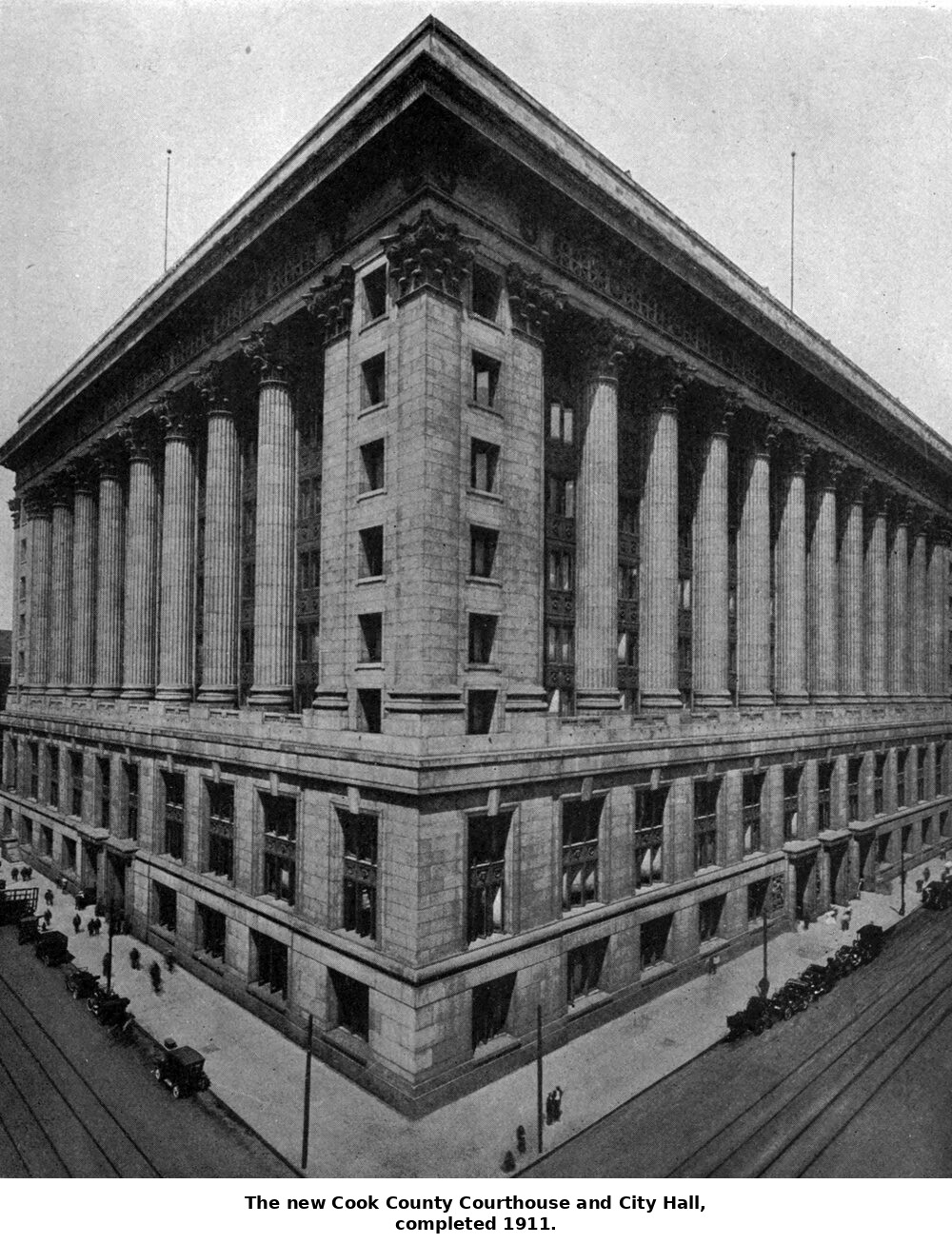
Chicago’s Prohibition-era gangsterism had a political patron in William Hale “Big Bill” Thompson, the Republican mayor who governed the city, with one term’s interruption, from 1915 to 1931. Thompson became a national figure of civic bluster when he threatened to punch King George V “on the snoot” over an imagined slight to American history textbooks. He expanded the lakefront with the Municipal Pier that would later be renamed Navy Pier, and courted Black voters on the South Side with a directness few white politicians of his era attempted. However, his final term became inseparable from Al Capone’s bootlegging empire, whose money and muscle Thompson’s administration tolerated, and by some accounts actively protected in return for electoral support.
Big Bill Thompson’s Republican machine drew heavily on Black voters, and it rewarded Oscar De Priest. In 1915 he became Chicago’s first Black alderman, and in 1928 the South Side sent him to Congress. He was the first Black congressman elected in the twentieth century and the first ever from a northern state.
The scandal of that alliance, combined with the Depression’s onset, finally broke Thompson’s hold on City Hall. Anton Cermak, a Democrat born in Bohemia, had spent decades assembling a coalition of Poles, Bohemians, Germans, and Jews to challenge the long Irish grip on Chicago’s Democratic Party. In 1931, he won the mayoralty outright. Cermak’s own tenure ended barely two years later, when an assassin’s bullet apparently intended for President-elect Franklin Roosevelt struck him during a public appearance in Miami in February 1933. Cermak’s hand-picked successors, Mayor Edward J. Kelly and party chairman Patrick Nash, spent the following decade and a half building the disciplined, patronage-driven Democratic machine known as the “Kelly-Nash machine.” It would furnish both the organizational template and much of the personal apprenticeship for the man who inherited it in 1955, Richard J. Daley.
The Jazz Age and the Chicago Renaissance
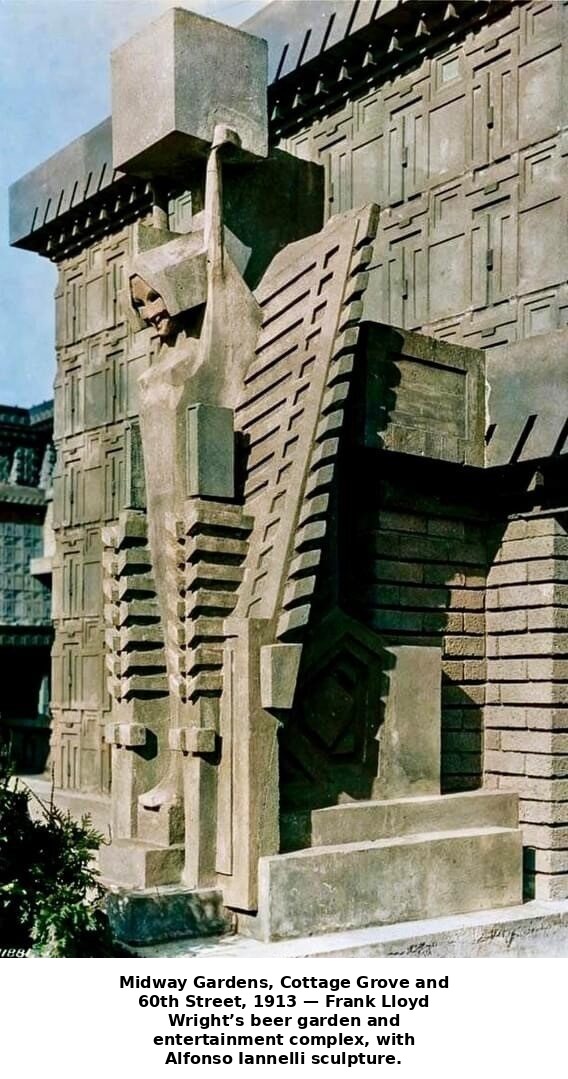
As New Orleans jazz musicians moved north in search of work, Chicago’s South Side, particularly the stretch of clubs and dance halls along State Street and 35th Street, became the music’s new capital. Cornetist King Oliver led his Creole Jazz Band at the Lincoln Gardens Café. In 1922, he sent for a young cornet player from New Orleans named Louis Armstrong to join him as second cornet. Armstrong’s arrival in Chicago is often treated as the moment jazz’s center of gravity shifted north. His subsequent recordings with his own Hot Five and Hot Seven groups in the mid-1920s helped establish him as the music’s first great virtuoso soloist. White Chicago musicians, including a loose circle later called the “Austin High Gang,” absorbed what they heard in South Side clubs and helped forge a hot, driving style that came to be called Chicago-style jazz.
The South Side’s churches produced a music of their own. Thomas A. Dorsey, a former blues pianist, wrote the songs that defined modern gospel, and Mahalia Jackson, who arrived from New Orleans in 1927, gave them their greatest voice. Her 1947 recording of “Move On Up a Little Higher” sold millions, and in 1963 she stood beside Martin Luther King Jr. at the March on Washington.
At the same time, the city’s literary life flourished in what critics later named the Chicago Renaissance. Theodore Dreiser had already drawn on Chicago’s commercial hustle in Sister Carrie. Robert Herrick anatomized the same rising commercial class in Chicago novels of ambition and marriage. Sherwood Anderson, working in advertising in Chicago, wrote Winesburg, Ohio while immersed in the city’s literary circles. Vachel Lindsay barnstormed the country reciting poems meant to be chanted aloud to a drumbeat, among them “General William Booth Enters Into Heaven” and “The Congo.” Carl Sandburg, a former Milwaukee newspaperman who settled in Chicago, published Chicago Poems in 1916. It opened with the poem “Chicago,” which famously addressed the city as “Hog Butcher for the World” and “City of the Big Shoulders.” Thus, an image of brawling industrial vitality was born that Chicagoans embraced as their own self-portrait for generations afterward. Where Burnham’s plan tried to give Chicago a monumental civic face, Sandburg and his contemporaries gave it a different voice, unpolished, muscular, and proud of its own grit.
The novelist Hamlin Garland, a decade removed by then from the stark Midwestern realism of his Main-Travelled Roads book, gave the movement a clubhouse of its own in 1907, when he founded The Cliff Dwellers club. It was a gathering place for many of the city’s writers, architects, and artists. In 1922, he won the Pulitzer Prize for A Daughter of the Middle Border. For most of the twentieth century the club occupied a penthouse atop Orchestra Hall, itself designed by fellow member Daniel Burnham, fitted out for the Cliff Dwellers by another member, the architect Howard Van Doren Shaw.
The Cliff Dwellers were not an isolated experiment but part of a much longer line of private clubs that had shaped Chicago’s cultural life since the rebuilding years, and further waves of such groups followed within a decade. The Arts Club of Chicago, founded in 1916 partly in reaction to the city’s cool reception of the 1913 Armory Show, became the country’s most important showcase for modern art before the Museum of Modern Art existed. It hosted Pablo Picasso’s first solo American exhibition in 1923. A rowdier counterpart flourished a few blocks north. The Dill Pickle Club was founded in 1917 by the labor organizer Jack Jones. It came out of the soapbox culture of nearby Bughouse Square, and drew many of the same Chicago Renaissance writers among them, including Anderson, Sandburg, and Dreiser. Other members included anarchists, poets, and hoboes, until the Depression closed its doors in 1934.
Essanay Studios and Chicago’s Movie Moment
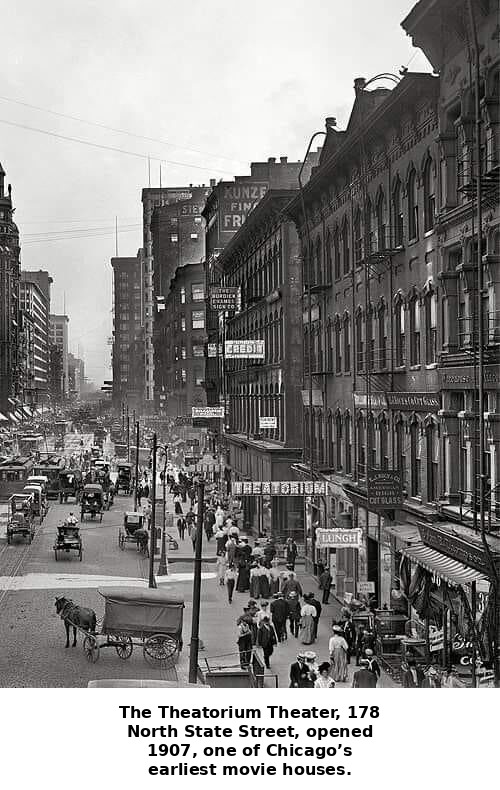
Before Hollywood consolidated the film industry on the West Coast, Chicago was briefly one of American moviemaking’s most important addresses. George Kirke Spoor and the cowboy actor Gilbert M. “Broncho Billy” Anderson founded Essanay Film Manufacturing Company in Chicago in 1907. The studio name was a phonetic spelling of their initials, S and A, and they built the studio on Argyle Street on the North Side. It turned out hundreds of one- and two-reel shorts a year. Essanay’s biggest coup came in late 1914, when it lured Charlie Chaplin away from Mack Sennett’s Keystone studio with a bigger salary and his own production unit. Chaplin made fourteen comedies for Essanay in 1915 and 1916, including The Tramp. This was the film that introduced the wistful closing shot, the lonely vagabond ambling away down a country road, that became Chaplin’s signature.
A young Chicago-born extra named Gloria Swanson got her start in bit parts in several of those same Essanay pictures before going on to Hollywood stardom. Decades later, she received an Academy Award nomination for Sunset Boulevard. Essanay’s Chicago studio couldn’t compete for long with Southern California’s year-round sunlight and cheaper land, and production wound down through the late 1910s. However, for a few remarkable years, the future of American film ran through a former livery stable on the North Side.
The Goodman Theatre and the Golden Age of Radio
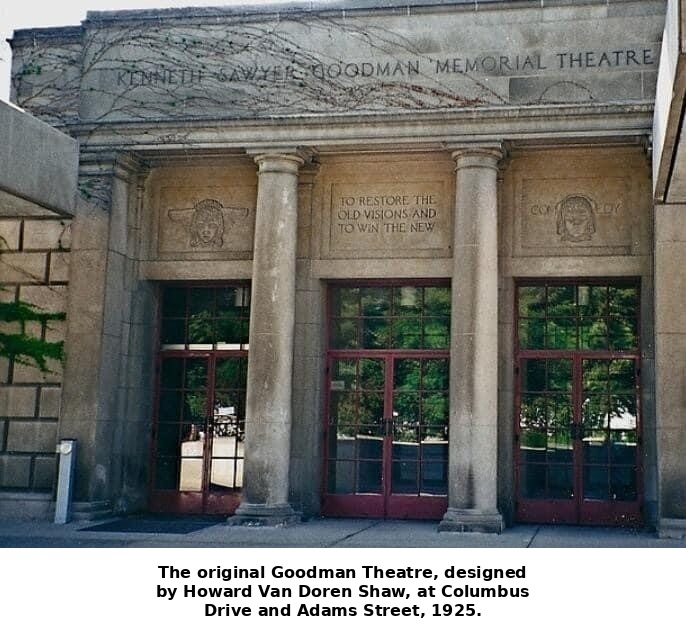
Chicago’s live theater found a lasting new institution in 1925, when William O. and Erna Goodman donated $250,000 to the Art Institute of Chicago to build a repertory theater and drama school. The gift was in memory of their son, the playwright Kenneth Sawyer Goodman, who had died in the 1918 influenza pandemic. Designed by the architect Howard Van Doren Shaw, the Goodman Theatre opened on October 20, 1925. Though later replaced on its site by construction of the Modern Wing of the Art Institute, it remains, under later reorganizations, the city’s oldest continuously operating nonprofit theater.
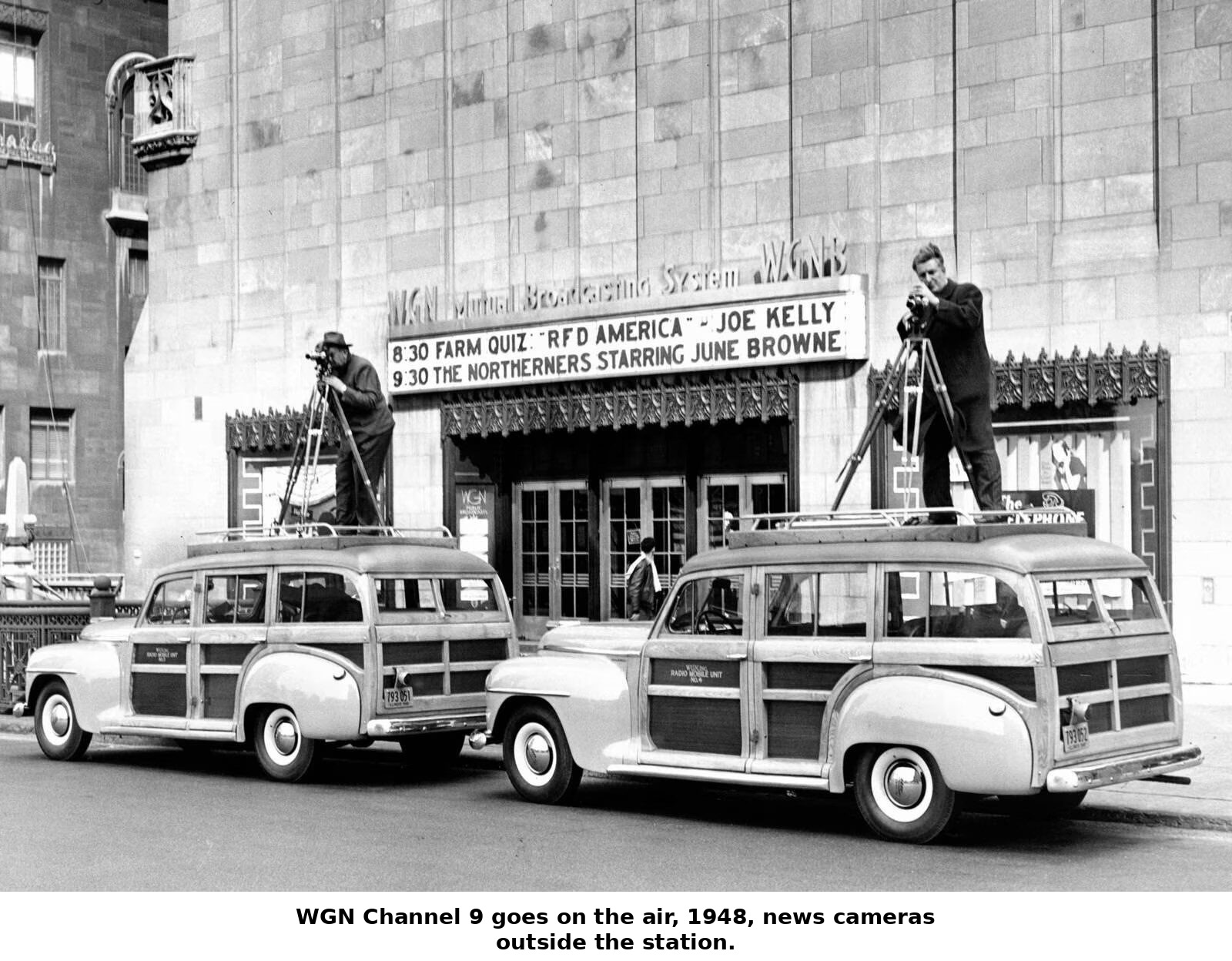
At about the same time, Chicago became one of the three or four cities that built American radio’s first golden age. The flat Midwestern terrain let a strong Chicago radio signal carry from the Atlantic seaboard to the Rockies. Also, because the city sat at the switching point of the young coast-to-coast networks, station WGN, broadcasting from the Wrigley Building, and WMAQ and WLS fed a remarkable share of the nation’s daily programming throughout the 1920s and 1930s. WGN’s 1926 serial Sam ‘n’ Henry, created by Freeman Gosden and Charles Correll, moved across town to WMAQ in 1928 and was reborn as Amos ‘n’ Andy. It later became network radio’s first true national phenomenon and, along with homegrown favorites like Fibber McGee and Molly, carried the Chicago name into millions of American living rooms years before television existed.
No one shaped what Chicagoans read and heard more than Col. Robert R. McCormick, who ran the Chicago Tribune for more than forty years. He built the Gothic Tribune Tower after a famous 1922 design competition, and in 1924 put the paper on the air as WGN. Its call letters stood for “World’s Greatest Newspaper.” His editorials were fiercely Republican and isolationist.
A Fair in the Depths of the Depression
The Depression brought down Chicago’s most powerful businessman. Samuel Insull, once Thomas Edison’s secretary, had built Commonwealth Edison into a utility empire serving millions. In 1929, he opened the Civic Opera House on Wacker Drive. When his tangle of holding companies collapsed in 1932, thousands of small investors were wiped out. Insull fled to Greece, was brought back for trial, and was acquitted. In 1938, he famously died in Paris of a heart attack in the Place de la Concorde’s metro station with 20 cents in French francs in his pockets.
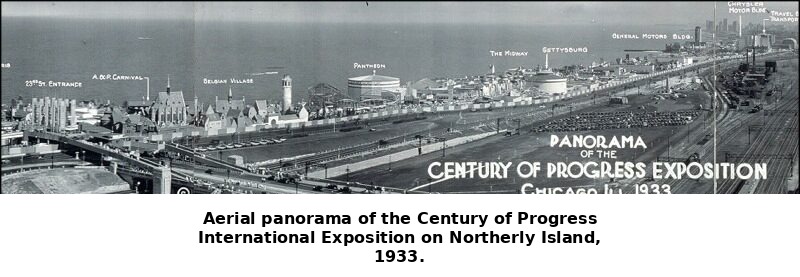
By the early 1930s the Depression had devastated Chicago’s industrial economy, throwing hundreds of thousands out of work. Against that backdrop the city staged the Century of Progress International Exposition in 1933 and 1934. Ostensibly to mark Chicago’s centennial as an incorporated city, it really served as an exercise in civic optimism. Built on reclaimed land along the lakefront south of the Loop, it was unlike the classical white-plaster grandeur of the 1893 fair. The Century of Progress embraced a streamlined, modernist aesthetic, with a theme of scientific and technological progress. It had exhibits from major corporations, a lit-up “Sky Ride,” and, in a widely publicized stunt, a beam of light supposedly triggered by starlight from Arcturus. The fair drew tens of millions of visitors over its two seasons and turned a modest profit, a rare feat for a world’s fair. For a depression-battered city it offered a controlled, electrically lit vision of a future still worth building toward, even as breadlines and Hoovervilles persisted only a few miles away.
The fair’s modernist pavilions took shape under an Architectural Commission that included John A. Holabird, who had taken over his father William Holabird’s celebrated firm, Holabird & Roche, after both its founding partners — William Holabird and Martin Roche — died in the late 1920s. Renamed Holabird & Root, the firm was busy reshaping the Loop’s skyline under the younger Holabird’s direction with Art Deco towers like the Chicago Board of Trade Building (1930) and the Palmolive Building (1929); his son, John Augur Holabird Jr., later joined the firm as well, becoming a partner in 1970 and carrying it into the postwar era.
In 1939, in the neighborhood behind the stockyards that Upton Sinclair had made infamous, a young criminologist named Saul Alinsky joined local leaders and Bishop Bernard Sheil to form the Back of the Yards Neighborhood Council. Its methods of organizing ordinary residents to bargain with power spread nationally and made Alinsky the father of community organizing. His 1971 book Rules for Radicals outlines Alinsky’s practical tactics, strategies, and philosophies for low-income and marginalized communities to gain social, political, and economic power.
On Memorial Day 1937, striking steelworkers and their families marched across a field toward the Republic Steel mill on the Southeast Side. Police opened fire. Ten people were killed and dozens wounded, many shot in the back. A newsreel of the shooting was suppressed for weeks, and when shown to a Senate committee it helped turn public opinion toward the unions.
Arsenal of Democracy
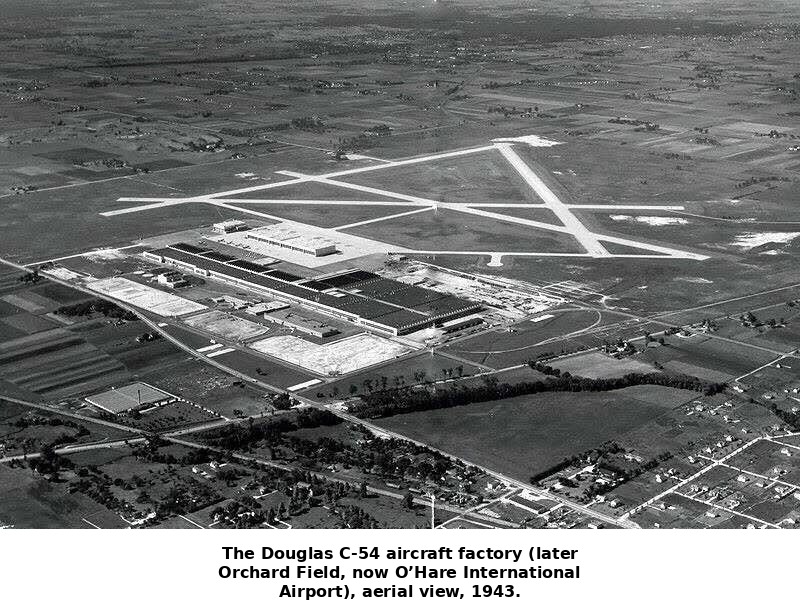

The Depression’s grip finally loosened with the mobilization for World War II. It restored full employment to Chicago’s factories, rail yards, and steel mills almost overnight. The city’s existing industrial base, its rail hub status, and its skilled workforce made it one of the country’s most important production centers for the war effort. It quickly began turning out steel, munitions, aircraft engines, electronics, and countless other military goods. The stockyards that had made Chicago famous as a meatpacking center now fed an army as well as a nation. The war years also drew a second wave of the Great Migration, as Black and white workers alike came north for defense jobs. This further swelled and reshaped neighborhoods that had been transformed a generation earlier. Chicago ended the war years as one of the most productive industrial regions on earth. Its factories were humming even as the city’s older social disconnects over housing, over neighborhood boundaries, over political power, all remained largely unresolved and would erupt again in the decades that followed.
The City These Fifty Years Made

By 1950, Chicago had become something new again. It was a global industrial power, a cultural capital, a byword for organized crime, and a city whose Black population after migration had remade whole swaths of its South and West Sides, with much of its twentieth-century history still to come. It was the city of Burnham’s audacious lakefront plan and Sandburg’s brawny verse, of Armstrong’s cornet and the Century of Progress, a place that insisted, against considerable evidence to the contrary, that it was building toward something better.
On the other hand, it was also the city of the 1919 riot and the St. Valentine’s Day Massacre. It was a place whose name became synonymous, worldwide, with both gangland violence and unresolved racial injustice. The Great Migration had permanently altered Chicago’s demographic map, creating Black Bronzeville as both a vibrant cultural capital, but also a confined, underserved district whose boundaries had been drawn by fear and discrimination rather than choice. This was a pattern the 1922 Commission report documented in detail and that would continue to shape Chicago’s politics and geography for the rest of the century.
Sources: Daniel H. Burnham and Edward H. Bennett, Plan of Chicago (1909); Carl Sandburg, Chicago Poems (1916); Chicago Commission on Race Relations, The Negro in Chicago: A Study of Race Relations and a Race Riot (1922); general reference and archival sources on Al Capone, the St. Valentine’s Day Massacre, the Chicago jazz scene and Louis Armstrong’s 1922 arrival, and the 1933–34 Century of Progress Exposition; Lois Wille, Forever Open, Clear, and Free: The Struggle for Chicago’s Lakefront (1972); Encyclopedia of Chicago, Lakefill; Libby Hill, The Chicago River: A Natural and Unnatural History (2000); U.S. Army Corps of Engineers, Rock Island District, Lockport Lock; Douglas Bukowski, Big Bill Thompson, Chicago, and the Politics of Image (1998); Roger Biles, Big City Boss in Depression and War: Mayor Edward J. Kelly of Chicago (1984); Emmett Dedmon, Fabulous Chicago (1953); Essanay Film Manufacturing Co., Made-in-Chicago Museum; Chicago History Museum, Chicago’s Silent Stars; Goodman Theatre, Chicago’s Oldest Theatre — Our Mission; Cheryl Honigford, A Very Brief History of Old Time Radio in Chicago.
Photo Sources: Al Capone’s Prairie Avenue house, 1925 — Chicago History Museum; St. Valentine’s Day Massacre scene, 1929 — Chicago History Museum; Cook County Courthouse and City Hall, 1911 — Chicago History Museum / Great Chicago Fire & the Web of Memory (Barnes-Crosby photograph); Midway Gardens, 1913 — Frank Lloyd Wright Foundation Archives / Art Institute of Chicago; Century of Progress Exposition, 1933 — Newberry Library, Chicago Aerial Survey Collection. Internet sources of other photos are not identified.