1. Tony Bowe on His Parents, Grandparents, Orchard Street & Winnetka
Tony Bowe on His Parents, Grandparents, Orchard Street & Winnetka
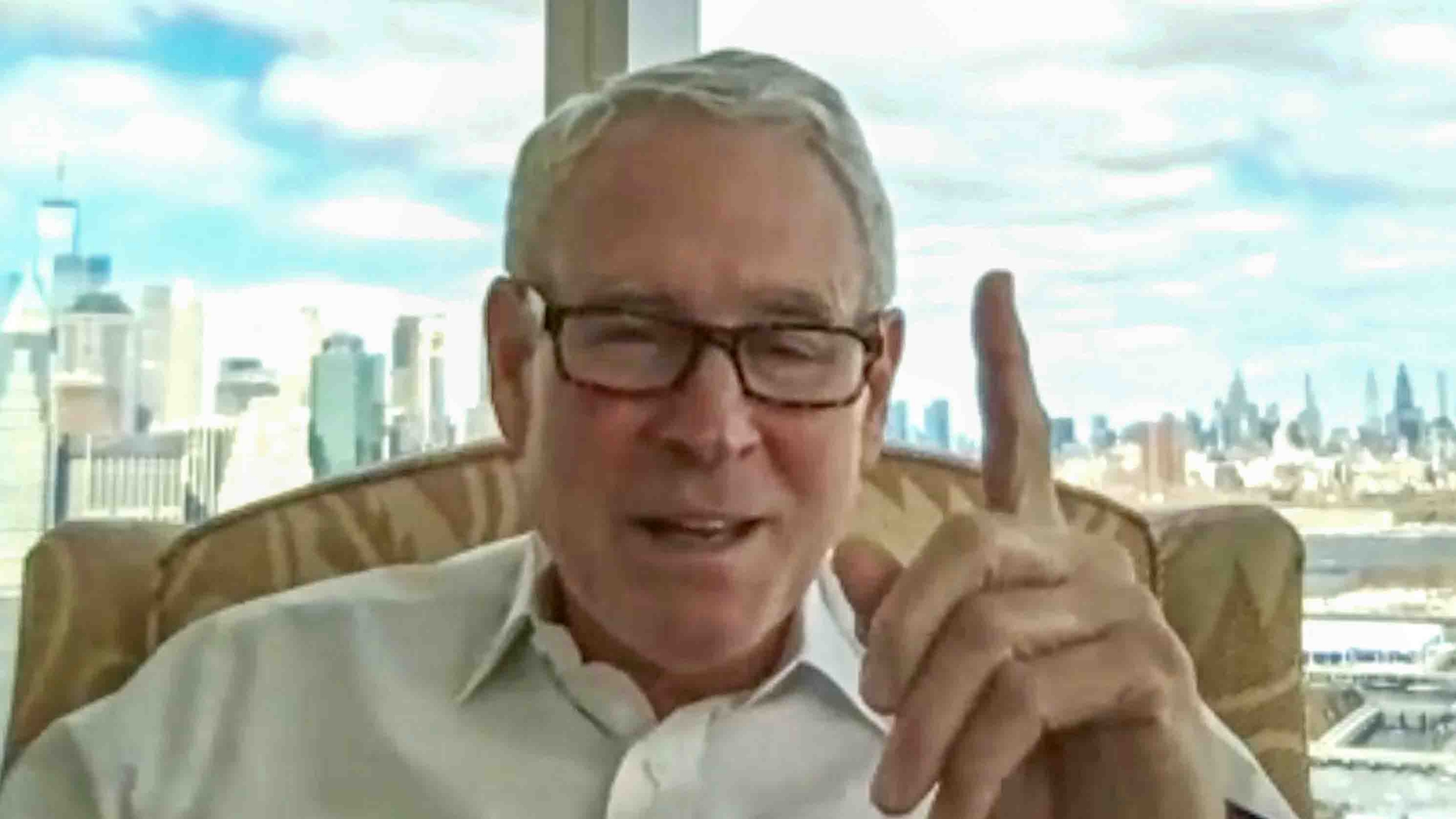
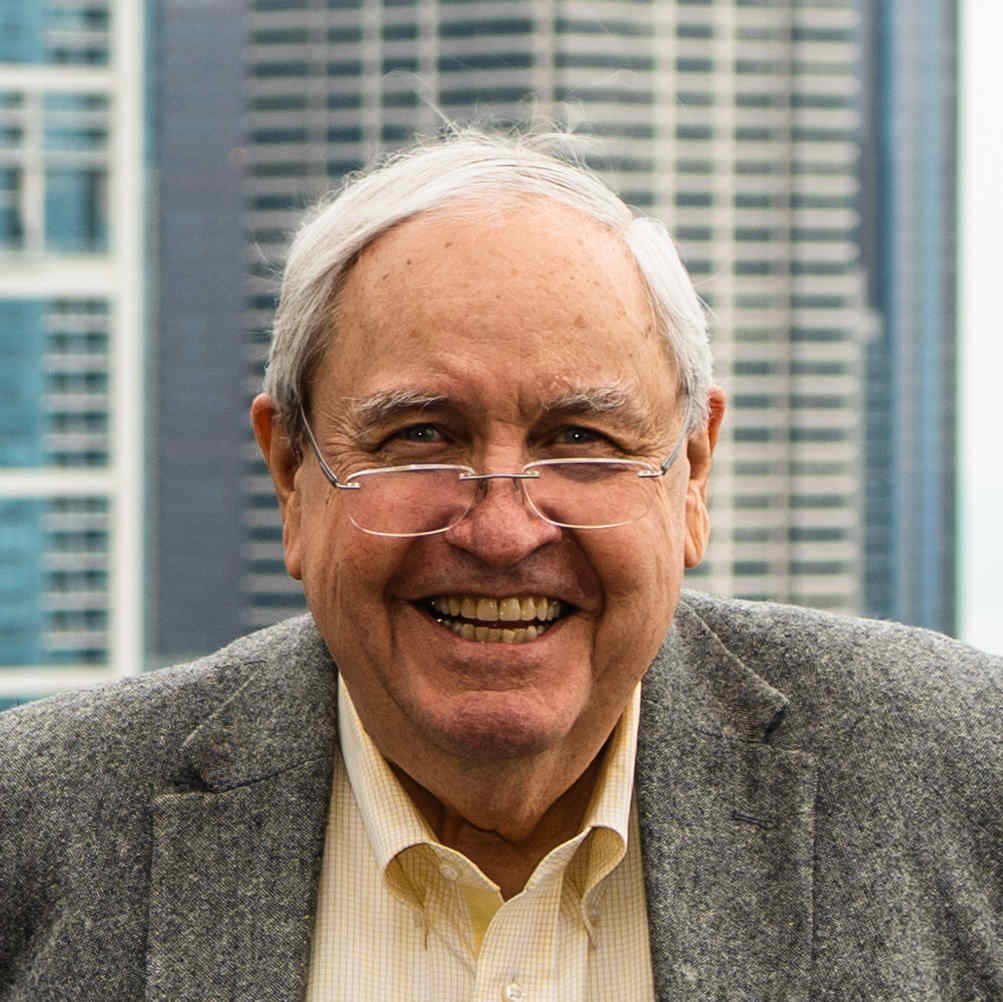
Interview of Anthony C. Bowe (TNB) by William J. Bowe (WJB) on February 6, 2026
Table of Contents
Summary
This interview captures a conversation between Bill Bowe (WJB) and his cousin Tony Bowe (TNB) about their shared family history. The discussion primarily focuses on memories of Tony’s grandparents, Judge Augustine J. Bowe and his wife Julia Lecour Bowe, who lived in apartment 4D at 1120 Lake Shore Drive in Chicago.
The conversation includes poignant recollections of Judge Bowe’s death in February 1966, when Tony was nine years old, including the dramatic discovery of his grandfather’s death, the identification of the body, and the funeral at Holy Name Cathedral with Chicago Mayor J. Daley in attendance. The interview also covers Julia’s later years living with Bill Bowe’s mother Mary Bowe before her death in 1986 after a long struggle with dementia.
Tony shares extensive information about his maternal grandparents, the Pargellis family, including his grandmother Betty Allen Pargellis who was a Radcliffe graduate and missionary in China, and his grandfather Stanley Pargellis, a Rhodes Scholar who became chief librarian at the Newberry Library in Chicago.
The conversation touches on Tony’s parents, John Edward Bowe and Katherine Pargellis Bowe, and their meeting through the connection between their families via Poetry Magazine. Tony discusses his mother Kathie Bowe’s education at Wellesley, and his father John’s legal career. Tony notes his father’s disappointment during his service as a judge in Chicago during the Greylord scandal when many of his colleagues were revealed to be corrupt.
Throughout, both participants reflect on their family history website project and the importance of preserving these memories for future generations.
Interview Transcript
Introduction and Website Collaboration (0:00)
WJB: Tony, before we get started, let me explain where this interview fits in to our earlier conversations. First of all, the website really wouldn’t be in its current place. I’m talking about https://wbowe.com with all of its family information, The Cliff Dwellers material, the photo archive, and now my memoir Riots & Rockets is up there now. None of that, all those family trees and the rest would be up there had you not really taken a look at that my early primitive shot at the website and said, “You should treat this thing more seriously.”
And then you got me a fine website building tutor through a friend of yours from high school. In any event, that has led to what I think has been a great collaboration and getting a lot of family material online that our children and others in the extended family may someday have an interest in.
And we started all of that with our talking about your grandparents, Judge Augustine J. Bowe and his wife Julia Lecour Bowe, my aunt and uncle. Gus of course was my father’s brother, and they had practiced law together. So maybe we can revisit a little bit from your perspective, your grandparents Gus and Julia. You didn’t quite know him the way I did, but can you talk about them a little bit and what you knew of their lives and then their later years?
TNB: Yes, I’d be delighted to. And thanks to you for everything that you’ve done to get the site up and running and make it as fulsome as it has become.
Tony’s Memories of His Grandparents at their Apartment (1:54)
TNB: With respect to Gus and Julia, you have already put forward a ton of material about them. And as you said, you did know them better than I did. So I won’t spend a huge amount of time talking about them. But what I do remember of them is, of course, is being at their apartment 4D at 1120 Lake Shore Drive. My parents used to take us boys, of whom I’ll tell you a little bit more later in our conversation, over there for Sunday night dinners. And I can remember sitting at the dining room table just off the living room with Gus at one end and Julia at the other and all of my brothers and I and my parents scattered around the table.
WJB: Now tell me, what years do you think that might have been?
Visiting Gus and Julia Bowe’s Apartment 4D (2:49)
TNB: Well, so Gus died in 1966, I think. It had to be before then. He died in February that year. I think it had to be probably 1963, ‘64, ‘65, when those visits were going on. I can picture the room to this day, all of the rooms, actually. I remember staying upstairs on the second floor. It was a duplex and there were bedrooms upstairs. I remember actually one evening spending the night there with Owen Thompson, who was also visiting. I’m guessing at that point it would have been after Gus had passed away, although maybe not. And I guess Julia moved out in 1968 to join your mother over in her apartment 4B, if I’m not mistaken.
WJB: Yes, 4B was on the other elevator tier of the 1120 apartment building on Elm Street.
The Death of Augustine J. Bowe (3:51)
TNB: So, in any event, what I particularly remember from 1966 is being at home on Orchard Street where we lived, up on the north side. And Julia, my grandmother was calling and saying that Gus was missing. And so my dad and I got in the car and drove over to 1120. I don’t know if you recall, but if you came into that apartment, immediately on your left was a coat closet, which also was the telephone room. Back in the day where you had only one telephone in an apartment often there was a little room dedicated to it. But in any event, I remember being in there and Julia got a phone call, the phone rang and she picked it up. And it was, I presume, the Chicago Police Department saying that they had recovered a body on Lakeshore Drive.
The police described to her a hat that the body was wearing. And then my father and Julia looked up in the coat closet on the shelf that had hats. And sure enough, this hat that Julia knew Gus had and had been described to her by the police was not on the shelf. This was pretty conclusive evidence that in fact the body that they found was Gus. And it was a sad moment. She burst into tears. I think somebody came and got me and took me home and they went and identified the body.
A few days later, his funeral was held. There was the mass held at Holy Name Cathedral, which is big, and every seat was full. We walked up the aisle and Gus was obviously in a casket at the front of the cathedral. I know Mayor Daley was there. I don’t remember much about the service, although it must have been extraordinary. I don’t recall who spoke or anything like that. I do recall is that once the service was complete, we got in a limousine and there was a procession of cars, including the hearse. We drove up Lake Shore Drive to the cemetery near Rogers Park.
WJB: Calvary Cemetery.
TNB: Right. Precisely. With the motorcade we had a police escort that led and tailed our procession up to Calvary. Those are some of my early memories about Gus and Julia and 1120.
WJB: How old were you in 1966 when Gus died?
TNB: I would have been nine. In fact, actually, he died in the first week of February and my birthday is on February 11th. So it was just before my ninth birthday. Right. Yes. My ninth birthday. I also remember going to school that week because as the front page of the Chicago Tribune over your right shoulder reveals, it was big news in Chicago when Gus died.
WJB: Yes. What I recall when you mentioned the little telephone room, I was also pressed into service that day. I was back from college going to law school at that point. At 4D Julia wasn’t taking calls and my mother was occupied with her and other things, so I was taking all of the calls that were coming in that little room. The calls included, of course, the newspapers. Here you had a prominent, elected Chicago official who’d dropped dead and he’d first gone missing. It was a bit of odd drama with a heart attack victim falling into a snowbank in the middle of winter.
If you were nine, then you remember when Julia moved across to the other elevator tier. The two widows at that point, my mother and your grandmother, who had been college roommates in the class of 1923 at Trinity College in Washington, D.C., they resumed their joint approach to life together.
TNB: Yes, I think that was obviously for both your mother and my grandmother, that was probably a difficult time of life. They both just lost their husbands. But my recollection is they seemed happy there. I remember then that rather than going to Gus and Julia’s apartment for Sunday dinners, we were going to your apartment and your mother was, of course, a remarkably kind and generous person.
I do recall one last story about Gus’s death. After the funeral and after we interred Gus at Calvary, I had a piano lesson. I took lessons from a woman named Crummel, who had an apartment near 1120. I had my piano lesson with her after my father took me there. And after I did my lesson, for some reason, she was playing a piece which actually has been a recurrent theme in my life, Debussy’s Arabesque Number Two. She played it beautifully. It’s a gorgeous piece of music. But I looked over at my father who was sitting there, and he was weeping. Well, yes, because it’s a tough day, I guess.
Moses Bowe (9:24)
WJB: I’m curious, although you wouldn’t have learned from Gussie anything about the Bowe family, I wonder if your father ever talked about what he had learned from Gus about Gus’s grandfather Moses Bowe.
TNB: Well, about all I recollect about Moses Bowe from that time in my life was the guy had a remarkable name. I don’t recall my father talking about that.
WJB: Your father once and only once told me a rare fact about the Bowe side of the family. There were always stories about the Canavans, Gus and Bill’s maternal grandfather, Anthony Canavan, your namesake. But I’d never heard much about their paternal grandfather, Moses Bowe, except I think from your father. Though, for all I know, he may have been referring not to Moses, but perhaps to the Canavans, but I wrote it down and I carried it around for a long time over the years. It was the only little factoid I had for a long time about where these ancestors came from in Ireland.
The important item I learned reminds me of Dustin Hoffman in The Graduate. He is told a key important thing in life is “plastics.” The one important thing I learned from your father was also one word, “Galway.” Later, as the internet came along and let us look at the old census and other records, I found a manifest of the ship. It showed the Canavan side of the family left for America from the port of Galway on the west coast of Ireland and landed at Baltimore. Only one word, but I owe your father for that important piece of information.
TNB: Right.
WJB: My mother, Mary Gwinn Bowe, makes a passing refererence to Moses Bowe in her family genealogy account The Families. While it mostly looked at the Canavan side of the family, she also wrote a little bit about Moses Bowe. Though I think he died as a farmer in DeKalb County to the west of Chicago, he had come to America an orphan at age 11 and later worked on the Erie Canal and for the Illinois Central railroad.
Julia Bowe’s Later Years (12:59)
WJB: Before we move on, I just wanted you to touch on Julia Bowe’s later years.
TNB: Julia lived with your mother until she became infirm. I think your mother indicated that it was a little bit more than she could handle. By then we moved to Winnetka and Julia came and lived with us in Winnetka for some time. It must have been my freshman and sophomore years. I don’t even know for how long, but I definitely remember her living with us. And then she ultimately ended up moving into a couple of assisted living places and nursing homes.
That all happened in 1972 or ’73, and she must have been a pretty hardy old bird because she didn’t die until 1986. For that entire almost 15-year period of time, she really suffered from, I’m not sure whether it was Alzheimer’s, but some form of dementia that gradually got worse over that period of time. I know it was very difficult for my father to watch that. I know my mother also did a very nice job of trying to look after her. We saw her pretty frequently, particularly in the 1970s, by the ’80s, she was less able to move around and we’d go and see her over at the nursing home.
Tony’s Grandparents: Stanley and Betty Allen Pargellis (14:37)
WJB: Catch me up a little bit on your mother’s family, her parents and her parents and where they were from.
TNB: Yes, I’d like to do that, because that’s not ground that’s been covered before. My mother was the offspring of Betty Allen Pargellis and Stanley Pargellis. Just by way of background, it is certainly true, and I’ve developed a greater appreciation for this over the years, that my grandparents, Gus and Julia, and Betty and Stanley were all genuinely remarkable people. They were very civilized people, they were good, honest people, bright, well educated, and very accomplished people.
You’ve chronicled Gus and Julia’s accomplishments over years, and they were truly remarkable. My grandparents on my mother’s side were similar. My grandmother was a child of my great grandparents, of course, and they were from a somewhat prominent family in Cambridge, Massachusetts. The Allen family had started and continued to operate into probably the 1920s and ’30s, an importing company in Boston called the Oriental Tea Company. They imported spices, tea, coffee, and sold it at retail.
WJB: Now, is that the store with the great teapot hanging on a sign outside?
TNB: It’s still there. The teapot is still there. It hangs over a Starbucks now. It’s a landmark in Boston. If you say to anybody who lives in Boston, are you familiar with this old tea kettle, everybody knows about it. They had it made as sort of the logo of the Oriental Tea Company. I don’t think it was a huge business, but it was a successful one. In addition to the retailing operation, where people could walk in and buy coffee and tea, they had what looked like a mail order business. One of my brothers turned up an invoice that they sent to Isabella Stewart Gardner, who the museum in Boston was founded by. She was a customer of the Oriental Tea Company where they sold her coffee and tea. And I think there was some dispute about the amount of an invoice, which Isabella Stewart Gardner actually personally contested in writing.
In any event, it was it must have been a pretty good business because they lived in a side by side mansion in Cambridge with two structures. And it was a pretty big house, and they had a lot of staff. And my great grandfather, Betty’s grandfather was the mayor of Cambridge, Massachusetts. I think it was the late 1870s. Also, with their earnings they bought in 1898 and 1899 property on the ocean in Kennebunkport, Maine, upon which they constructed two houses. It’s a gorgeous spot. I’ve spent just about every summer of my life up there, and we’ve maintained it almost as a museum to the family. It looks very much like it did.
WJB: I know it very well. It’s wonderful.
TNB: Yes, right. We have all the portraits of my great grandfather and all these family photographs. It’s a legacy to what they were all about.
In any event, my grandmother Betty went to Radcliffe and upon graduating, I think she was born in ’96, so she probably would have graduated from college in about 1918. There weren’t that many women graduating from college in 1918. She indeed did that. Then, not too long after she graduated, she was a religious person, and she ended up becoming a missionary in China and spent time in what was then called Peking (now referred to as Beijing) as a missionary. There was an article in a Boston newspaper about this young woman who was in far off Peking acting as a missionary.
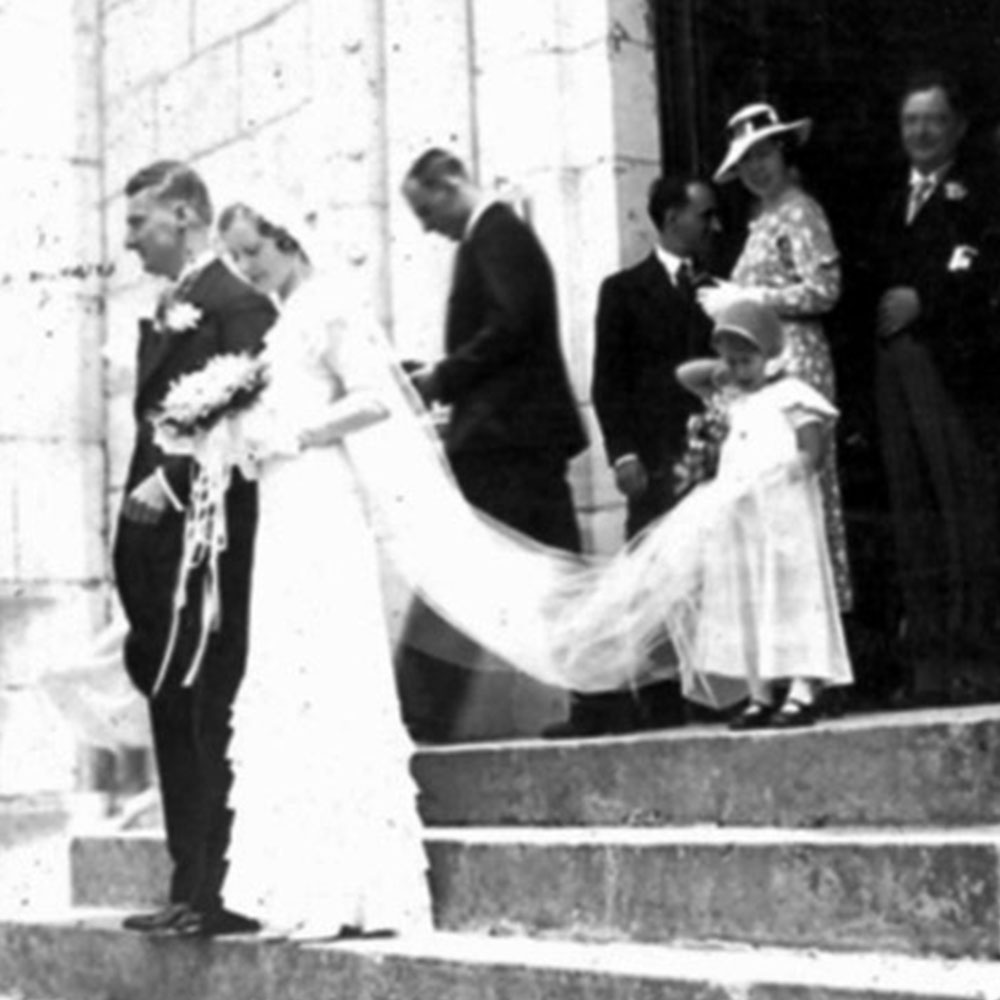
Somehow, she ended up in England and met my grandfather, Stanley Pargellis, who was a Rhodes scholar at Cambridge. They met there and were married not too long afterwards at a ceremony in Kennebunkport. They went on to have three children, one of whom was my mother.
My grandfather was a university professor. He taught history at Yale, and then at Caltech and at Scripps, and then ultimately he became the chief librarian at the Newberry Library in Chicago, which is a remarkable institution that thrives to this day.
In his role as the chief librarian at the Newberry, he was involved in cultural things in Chicago. And one of the things that he became involved in was Poetry Magazine, which Gus and Julia had spent a huge amount of time resuscitating. We could spend an hour talking about Poetry Magazine, it’s such a fabulous story. But to stay focused on Stanley for a moment, with his activities in Chicago.
WJB: Just a few years ago, when I became president of Chicago’s Wayfarers’ Club, which goes back to about I think 1905 to 1907, along in there, I discovered that Stanley Pargellis had preceded me as president of the Club. It started as a dinner club meeting during the winter months when people didn’t get out and about much. Mostly of course at the beginning, it was for men, and they together to discuss public affairs of the day in an off the record fashion.
TNB: Stanley arriving, I guess from his professorship at Yale. I think they moved to Chicago about the time my mother was a freshman in high school, so that would have been in 1944. And Stanley was head librarian at the Newberry until the mid 1960s. He passed away in 1968.
WJB: I met him once he came by 1120 to visit with my mother Mary and your grandmother Julia Bowe. I think was he had married a second time later in life then.
TNB: He did. He remarried after my grandmother died. She died in 1965 or so, just before Gus actually.
WJB: Was he living in Australia or in California at that point,
TNB: He got some type of visiting professorship at a university in Australia. That’s what I remember. He spent six months of every year there is my recollection. That probably would have been in 1966 or ’67. He really put in his time at the Newberry. I’ve since read articles about the history of the Newberry and the collection at the library increased dramatically during his tenure as head librarian. If you go there now (and I think you and I might have done this together when we saw David McCullough speak at a fundraiser for the Newberry), if you go back to the executive offices, which my mother paraded us back through to show us where Stanley’s office was, there is still a portrait of him hanging on the wall.
WJB: That’s a sweet picture of you, your mother and brothers standing before his portrait at that spot.
Katherine Pargellis Bowe (24:22)
TNB: I don’t know this as a matter of fact, but I’m reasonably certain because it just makes sense, that because Stanley and Gus and Julia knew each other from Poetry Magazine work, I do know that they introduced my father and mother to one another. I suspect it was by virtue of that Poetry Magazine collaboration that they knew each other. So that’s how my parents met each other. That’s probably a useful point at which to tell you a little bit about my parents.
As I mentioned my mother was born in Boston. She moved with her father of course around these various places where he was a professor New Haven, then California, and then ultimately Chicago. She ended up going to Francis Parker for high school, graduated and then went to Wellesley College. After she graduated from Wellesley in 1952, she came back to Chicago. She was a schoolteacher in Chicago for two or three years. Then in 1955 she married my father at a ceremony in Chicago.
WJB: In Kennebunkport, Maine as I remember. I’ve seen wonderful pictures of that marriage gathering.
TNB: Yes. I wonder were you there?
WJB: No, I wasn’t, but I got all the pictures that my mother collected and they’re on the website.
John Edward Bowe’s Legal and Judicial Career (25:37)
TNB: Yes, they’re beautiful. My father was born in 1928 and raised in Chicago. He attended The Latin School of Chicago Latin, but he didn’t graduate from Latin. He graduated from Carmel. After high school, he went to Brown University for a couple of years, but then graduated from college from Loyola. He served in the the Illinois National Guard, and he always told me that his unit in the Illinois National Guard had been designated to ship out for Korea, and that they were preparing to do that when the war ended. So, he never left U.S. soil, but did in fact spend some time in the National Guard like your brother Richard did subsequently.
WJB: I was unaware that your dad had served in the Guard as well. That’s news to me.
TNB: Yes, great. After college, he had enrolled at Chicago Kent Law School, and like his father became an attorney. Upon graduating, he joined Bowe, Bowe & Casey, the family law firm, which is famous on the site. He practiced law with Bowe, Bowe & Casey. As you and I have discussed, the firm handled personal injury and workers compensation cases. That business became less vibrant over time and my father ultimately in the mid-1960s left Bowe, Bowe & Casey to become the administrative assistant to the Appellate Court of Illinois. This resulted in his having a fantastic office on the top floor of the newly constructed Civic Center (later the Richard J. Daley Center). A few years later, after he served as the administrative assistant of the Appellate Court, he became an Associate Justice of the Circuit Court of Cook County. I think happened in about 1971 or ’72.
He had always been active in Chicago politics and served as a precinct captain in the Democratic Party. This is in the heyday of the Daley Democratic Machine in Chicago. And if you wanted a job working in the court system, one way to get there was to be a good precinct captain. So my father served as a precinct captain in the 44th ward.
At one point there was some mention of the possibility that he might run for alderman, which ultimately didn’t do. But I do remember politicking with him on Lakeview Avenue or might have been Lincoln Park West, but we were in the vestibule of one of those apartment buildings along there. I guess it was Lakeview actually. We had our arms full of Democratic campaign literature. I don’t remember who was running, but he was leaving it inside the front door, which wasn’t locked. There was an inside door that was locked in this reasonably large apartment building. As we were dropping off this stuff, one of the residents asked my father what he was doing. He said, “I’m a precinct captain and we’re working on the current election.” And the guy asked my father what party he was working with, and my father said the Democratic Party. This guy then let loose with a stream of obscenities. I was probably 11years old or something like that. It was actually was quite shocking at the time, My father to his credit reprimanded the guy for speaking the way he did in front of a child. I remember it quite clearly.
Early Childhood Memories (29:59)
WJB: Where were you living before Orchard Street. What apartment?
TNB: I think my first residence in Chicago was in an apartment on Lakeview or it might have been at St. James or one block to the south of that. It was a walk-up apartment and right across the street from Lincoln Park.
WJB: John and Martha Casey were there on Deming Street and Lakeview.
TNB: Oh wow, I didn’t realize that. I think my earliest memory is we were living in that apartment, and my mother had taken me across the street to Lincoln Park to play in the playground. I was clambering up this jungle gym. and I must have been, I’m thinking three or four years old. Somehow, I got to the top of this jungle gym and fell down and landed on my head. My mother got me across the street to a Catholic hospital.
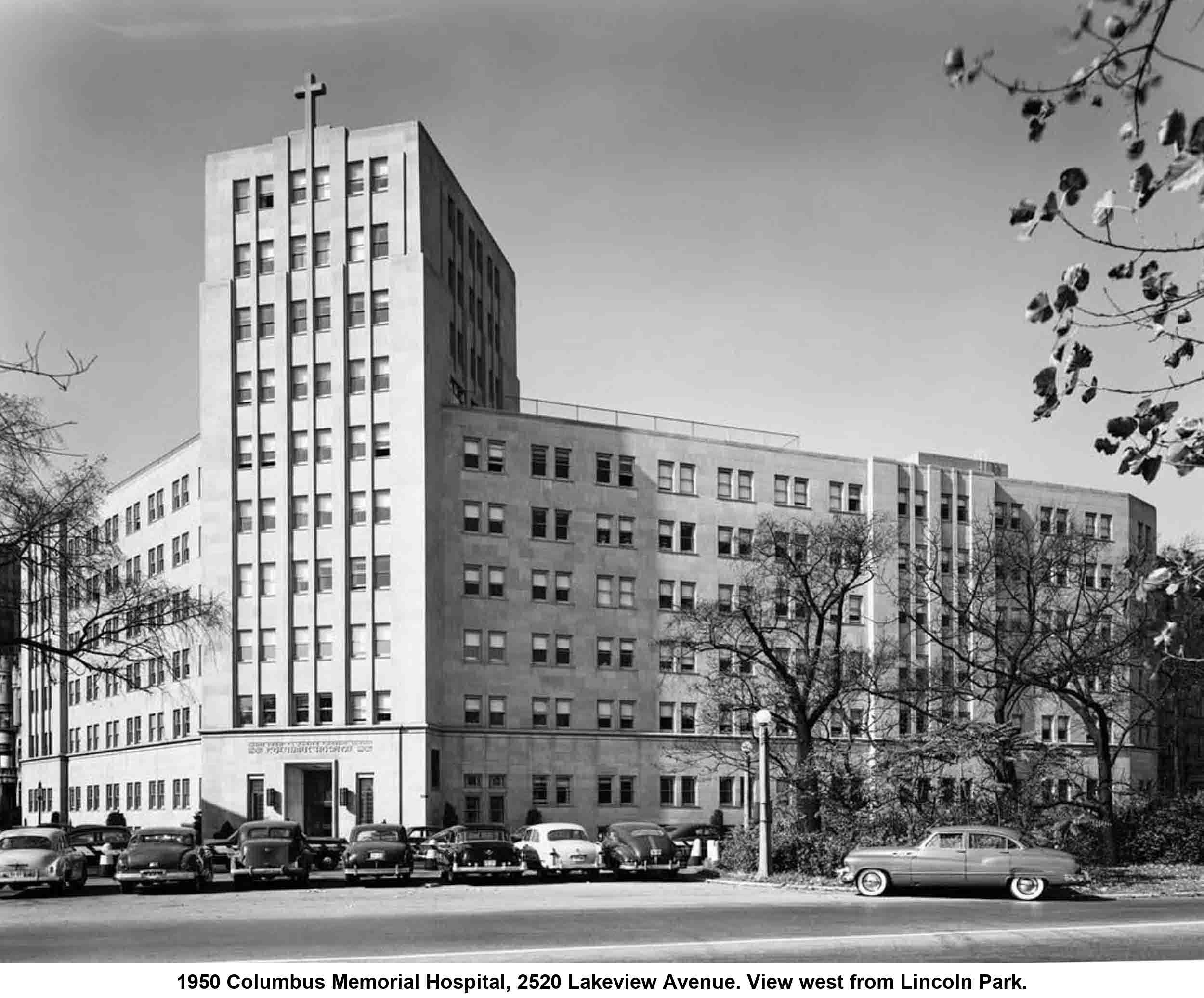
WJB: Oh sure, Columbus Hospital.
TNB: Yes, that’s exactly right, Columbus Hospital. I remember being in the emergency room on my back looking up and seeing I was surrounded by nuns who were the nurses. I think they were definitely in religious as well as nursing garb. I was fine, but I did that I think is my first memory,
WJB: So, you thought you might have made it to the pearly gates, perhaps a little early.
I have a memory of that hospital that’s precious. John Casey lived across the street from the addition that was built to the hospital on the south of the original hospital at Deming Street there by the park. On top of this four story addition being built there was to be an enormous granite cross.
TNB: I can picture it actually. I know what you’re talking about.
WJB: It might have been a story or more tall. One day, I happened to be there visiting my uncle and aunt, John and Martha Casey. I was outside on the street with John Casey and we were watching a foreman direct an enormous crane as it lifted this cross up above the street, up and over the addition and then putting it down on the roof.
Think about Federico Fellini’s film La Dolca Vita with its famous scene of a helicopter flying a statue of Jesus Christ over Rome. It was a very dramatic scene on Deming Street that day. There was a little bit of a wind and while it wasn’t really a dangerous an operation, it was a delicate one. The foreman who was directing this was increasingly concerned things were going awry. Finally, he can’t hold it in anymore and starts cursing at the crane operator, “God damn it! Will you stop.”
TNB: Did they drop it.
WJB: No, it didn’t drop it. But what he did drop was his respect for the man on the cross by unleashing a mouthful of obscenities and condemnations of the deity.
Reflecting on John Bowe’s Legal and Judicial Career (34:10)
TNB: My dad served as a judge in Chicago for from the early 1970s until he retired, which must have been about 1990. He spent a lot of time in these low level courts, traffic court and bail bond court. I think he generally found it not that interesting.
Then there was this horrible scandal that took place in the Chicago court system.
WJB: Yes, the Greylord scandal.
TNB: Many of his colleagues as judges in Chicago turned out to be crooks. I think he found that very disheartening, and I think contributed to his decision to retire in his early 60s. My father was genuinely an incredibly honest person, perhaps to a fault.
WJB: Yes, that would certainly have been the son of Gus and Julia, for sure.
TNB: He was an intelligent person, and he must have had to be repeatedly offered bribes to make decisions. I’m sure he repeatedly refused them. It was just heartbreaking for him to see that kind of thing happen in the Chicago court system.