Jeddah Tower, World’s Tallest Building


 Editor’s Note: Former president of The Cliff Dwellers Ben Johnson is a project manager at Chicago’s Adrian Smith + Gordon Gill Architecture. In this role, he has organized and led design and technical team efforts for multiple large-scale international projects. These include Jeddah Tower, the world’s next tallest building, now under construction in Saudi Arabia. On April 6, 2026, Ben’s family members and a full house of Cliff Dwellers and their guests turned out to hear Ben’s animated description of the origin, design and construction this exceptional project now rising on its Red Sea site.
With the Jeddah Tower going up halfway around the world, the audience was reminded Chicago architects remain at the cutting edge of what is today a global marketplace for their services.
Jeddah Tower – The World’s Tallest Building
Remarks of Ben Johnson, AS & GG
The Cliff Dwellers
April 6, 2026
Introduction
On April 6, 2026, Ben Johnson of Adrian Smith + Gordon Gill Architecture (AS+GG) delivered a detailed presentation at The Cliff Dwellers club regarding the Jeddah Tower project. As the world’s next tallest building, the Jeddah Tower represents a landmark achievement in structural engineering and architectural vision. Johnson, who has been involved with the project since its inception in 2009, provided an insider’s look at the tower’s design history, its record-breaking technical features, and the current status of its construction in Saudi Arabia.
Index
- Club Introduction and Opening Remarks [00:00]
- The Vision for the World’s Next Tallest Building [00:51]
- The Human Drive for “Megatall” Structures [01:37]
- The 2009 Design Competition [02:34]
- The Client and Design Philosophy [03:30]
- Simplicity, Efficiency, and the “Tallest, Cheapest” Building [04:06]
- Feature Focus: The Sky Terrace and Helipad [05:08]
- The Project Team and Technical Expertise [05:52]
- Defining Scale: Supertall vs. Megatall [06:30]
- The Economic Logic of High-Altitude Observatories [09:46]
- Strategy in Tall Building Height [11:19]
- Residential Design and Entrance Logistics [12:53]
- Vertical Transportation: Pioneering Carbon Fiber Ropes [19:40]
- Engineering the Spire and Observatory Levels [21:15]
- Structural Systems and Soil Analysis [30:21]
- The “Three-Legged Stool” Structural Philosophy [32:07]
- Managing Environmental Challenges: Wind and Corrosion [35:29]
- Wind Tunnel Testing and Building Harmonics [37:14]
- Mechanical, Electrical, and Plumbing Systems, Fire Safety, and Exterior Enclosures [42:14]
- Maintenance, Cleaning, and Concrete Pumping [51:25]
- Construction Methodology and Logistics [56:22]
- The “Legacy” Phase and Restarting Construction [59:52]
- Current Progress and Sustainability Goals [01:03:10]
Summary
The Jeddah Tower is designed to be the world’s first “megatall” structure to exceed 1,000 meters in height. Originating from a prestigious 2009 design competition, the project was won by the Chicago-based firm AS+GG through a design philosophy that prioritizes structural simplicity and economic efficiency. Key innovations discussed include a “three-legged stool” structural system inspired by the Burj Khalifa, the pioneering use of carbon fiber elevator ropes to overcome vertical limits, and a multi-tiered spire containing the world’s highest observatory. Despite previous delays, construction has restarted, focusing on the complex logistics of pumping concrete and installing rebar at unprecedented altitudes.
Transcript
- Club Introduction and Opening Remarks [00:00]
Hear ye, hear ye! The club shall come to order. Before we begin, we have some business to attend to: please join The Cliff Dwellers if you are not already a member. I want to note that this speech is happening exclusively here at The Cliff Dwellers and not at the University Club or the Union League Club. Not that it couldn’t happen at those clubs for the right price, but for today, spread the word. I want to give a huge shout-out to the team, the chef, and everyone involved. Looking at the setup, I almost feel like I am in Jeddah, though it is admittedly a little colder here in Chicago.
- The Vision for the World’s Next Tallest Building [00:51]
Today, we are discussing the world’s tallest building—specifically, the next world’s tallest building. I was lucky enough to be on the team right at the beginning, though I was removed from the project for a while before returning. This job has a long history, starting back in 2009. We are going to talk about the background, the history, the design itself, and then provide an update on the current state of construction. Construction has restarted and is currently “going gangbusters.” We have a saying in our firm: “drinking from a fire hose,” and with 200 slides to cover, that is exactly what we are about to do.
- The Human Drive for “Megatall” Structures [01:37]
Why build tall? As members of The Cliff Dwellers, I do not think I even have to answer that question for this group. We have been trying to figure out how to reach these heights for a long time, and we will continue to keep trying. We have done it over and over, and it is simply part of who we are. In the global market of high-design super-projects, the question is not “why tall,” but rather, “how tall.”
- The 2009 Design Competition [02:34]
The list of competitors chosen for this project in 2009 represents a very stiff competition. These are firms that have all completed equivalent structures. For instance, the Burj Khalifa in Dubai—the current world’s tallest building—was designed by Adrian Smith while he was with SOM here in Chicago. This image shows some of our process and the various iterations we went through. Ultimately, we presented our design at the client’s office in Riyadh, located in the Kingdom Center, which was designed by Pickard Chilton—another firm on that competitor list.
- The Client and Design Philosophy [03:30]
The client is Prince Al-Waleed bin Talal. He owns the Four Seasons, a large chunk of Citibank, and many other ventures. He was the original impetus for the project. This image shows the competition team meeting back in 2009, featuring all the competitor groups. The model of what we presented is visible in this view, and there is a version of this image right next to the fireplace here in the club. What we came up with is brilliant and stunning in all its requirements, but one of the key points is its simplicity.
- Simplicity, Efficiency, and the “Tallest, Cheapest” Building [04:06]
It is very easy for a project of this magnitude to become way too complex. It is already difficult enough to get where we are trying to go. If you do not have a core concept with the ability to be simple, it will not happen. Given the headwinds against a project like this—including money and geopolitical risks—efficiency is paramount. We have a saying: we are building the “world’s tallest, cheapest” building. It is not actually cheap, I promise you, but it is incredibly efficient.
- Feature Focus: The Sky Terrace and Helipad [05:08]
This is the infamous sky terrace. It was originally envisioned as a helipad, though it is unlikely anyone will ever actually land a helicopter there. It has since been reimagined as a viewing terrace. These renderings show what is to come. Interestingly, during the competition, the client pointed to a lamp in his office and asked if someone could just bring him that. Everyone came with something outrageous, but we focused on what could actually be built.
- The Project Team and Technical Expertise [05:52]
It takes a massive team to pull this off. We are AS+GG (Adrian Smith + Gordon Gill Architecture), a Chicago firm. Thornton Tomasetti served as the structural engineer, with Bob Sinn being instrumental to the original thesis of the structural design. That structural design is the key to making this project work.
- Defining Scale: Supertall vs. Megatall [06:30]
In our industry, we distinguish between “Supertall” buildings, which are over 300 meters, and “Megatall” buildings, which exceed 600 meters. The Jeddah Tower is a megatall project. At this height, the logistics become incredibly difficult. You need expert partners for everything from landscape architecture to lighting.
- The Economic Logic of High-Altitude Observatories [09:46]
One of the most important elements of the tower is the observatory. These observatories are currently massive revenue generators for supertall buildings. Because you can only charge so much for a hotel room or a condo, the “raking in” of money often comes from the public viewing decks at the very top.
- Strategy in Tall Building Height [11:19]
When competing for the title of “world’s tallest,” firms will do anything to win, which sometimes includes a bit of strategic “cheating.” This often means extending the spire as far as possible to gain extra height without adding functional floors.
- Residential Design and Entrance Logistics [12:53]
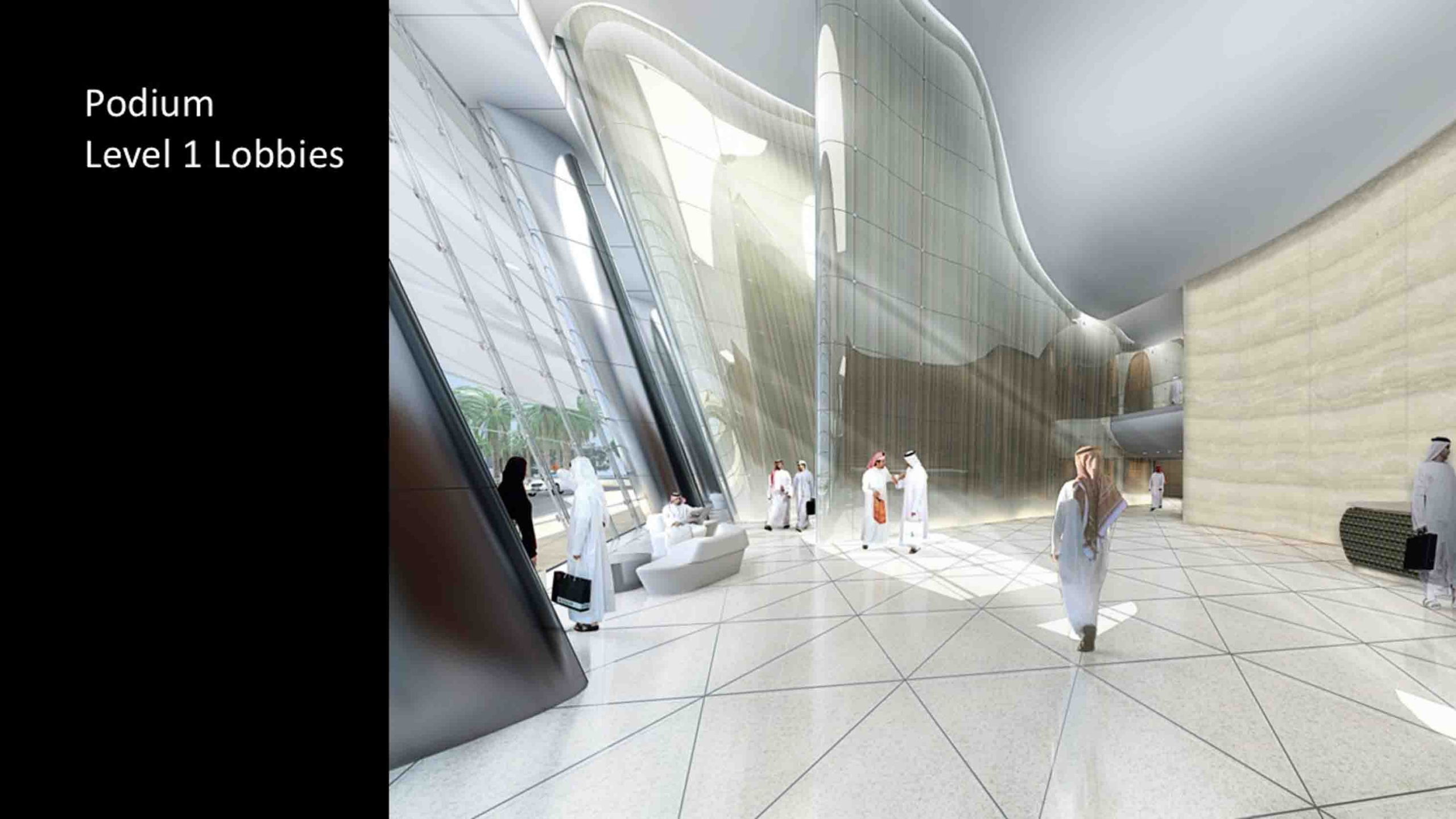
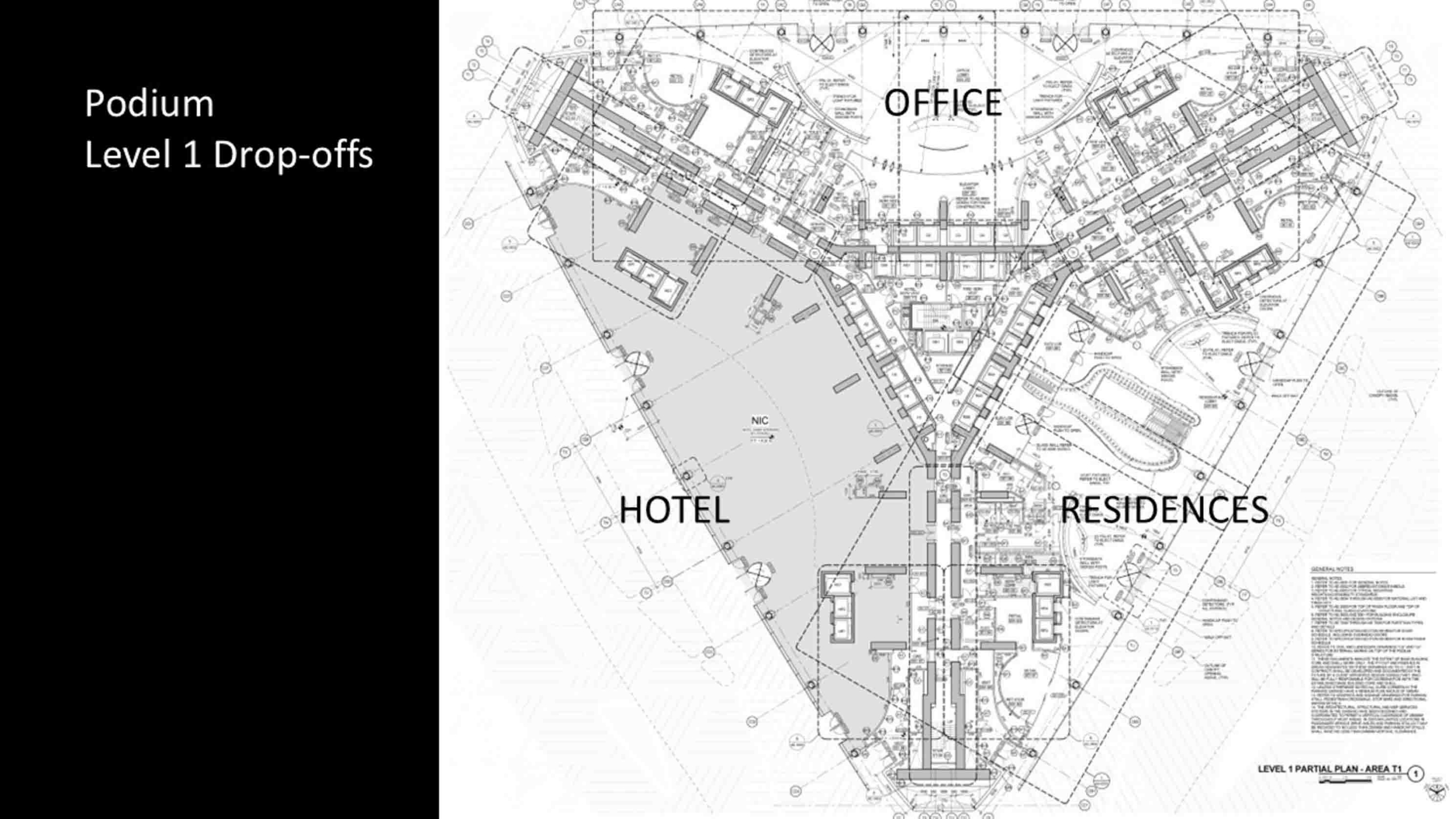
The logistics of the building’s entrances are complex. You cannot have the public going to the observatory using the same entrance as residents who have paid millions for their homes. We have designed separate pods and entrances to manage these different flows of people. In a megatall building, you basically live in the structure. We have designed various residential plans, including floors with four units each. Here is a three-dimensional view of how these units fit within the three wings of the tower.
- Vertical Transportation: Pioneering Carbon Fiber Ropes [19:40]
One thing we pioneered in this project is the use of carbon fiber elevator ropes. In elevator parlance, “ropes” are the cables that pull the car. Standard steel ropes eventually become so heavy that they can no longer support their own weight at these extreme heights. Carbon fiber allows us to overcome this physical limitation, enabling much longer vertical runs.
- Engineering the Spire and Observatory Levels [21:15]
The observatory level—Level 157—is actually spread across a couple of levels. Above that, the spire begins to taper. The spire is composed of several sections, which we call Spires A, B, and C. Spire A is the highest point. From the top, you can look out unobstructed from over 3,000 feet in the air.
- Structural Systems and Soil Analysis [30:21]
The foundation is built on soil analyzed through hundreds of borings taken throughout the region. Because the building is located near the coast, we have to deal with saltwater and a “caustic” environment. We installed a cathodic protection system to prevent the structural piles from corroding.
- The “Three-Legged Stool” Structural Philosophy [32:07]
We call our structural system the “three-legged stool.” This three-winged shape provides a stable base that tapers as it rises, which is the most efficient way to manage weight and wind. It is similar to the logic used for the Burj Khalifa, but refined for the specific needs of the Jeddah Tower.
- Managing Environmental Challenges: Wind and Corrosion [35:29]
Wind is the primary enemy of tall buildings. When a building is this tall, it behaves like a giant swing. We have to engineer the building’s harmonics so that the motion is not frightening for the people inside.
- Wind Tunnel Testing and Building Harmonics [37:14]
We use wind tunnel testing and Computational Fluid Dynamics (CFD) to analyze how the tower will respond to high-altitude currents. In some cases, supertall buildings require heavy damper systems—essentially giant weights—to counteract sway.
- MEP Systems, Fire Safety, and Exterior Enclosures [42:14]
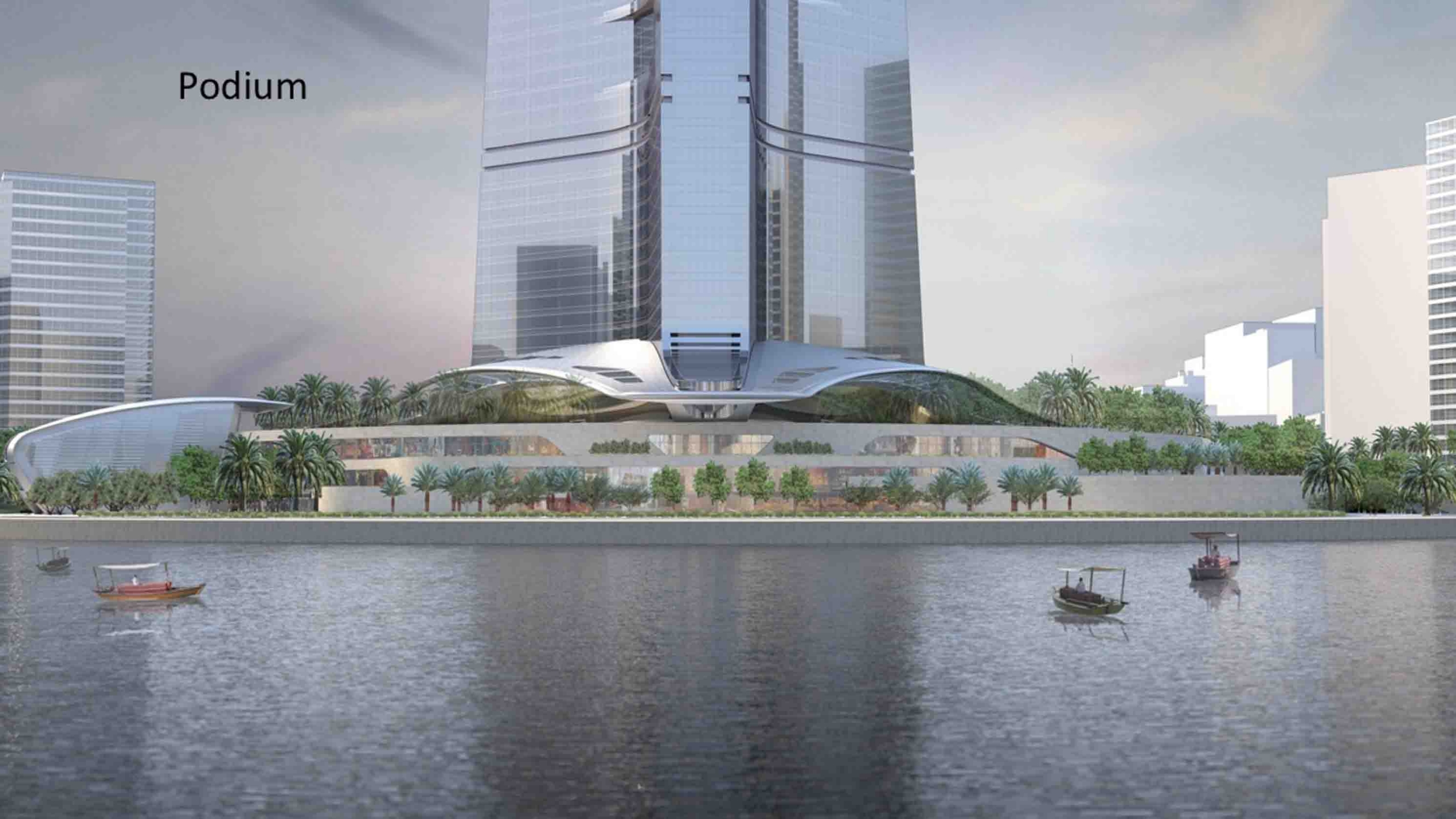
The building contains all typical mechanical, electrical, and plumbing systems, but they are scaled for a megatall environment. Fire safety is a major priority; we have protocols to manage and shuttle thousands of people across various floors in an emergency. The exterior wall uses a panel system with balconies, designed to be both aesthetic and functional.
- Maintenance, Cleaning, and Concrete Pumping [51:25]
Cleaning and maintenance at 1,000 meters is a significant challenge. You cannot simply use “mops and buckets,” as that would be both inefficient and potentially dangerous. One of the most impressive feats is pumping concrete to such extreme heights. We have to plan for temporary openings in the structure to facilitate this during the construction process.
- Construction Methodology and Logistics [56:22]
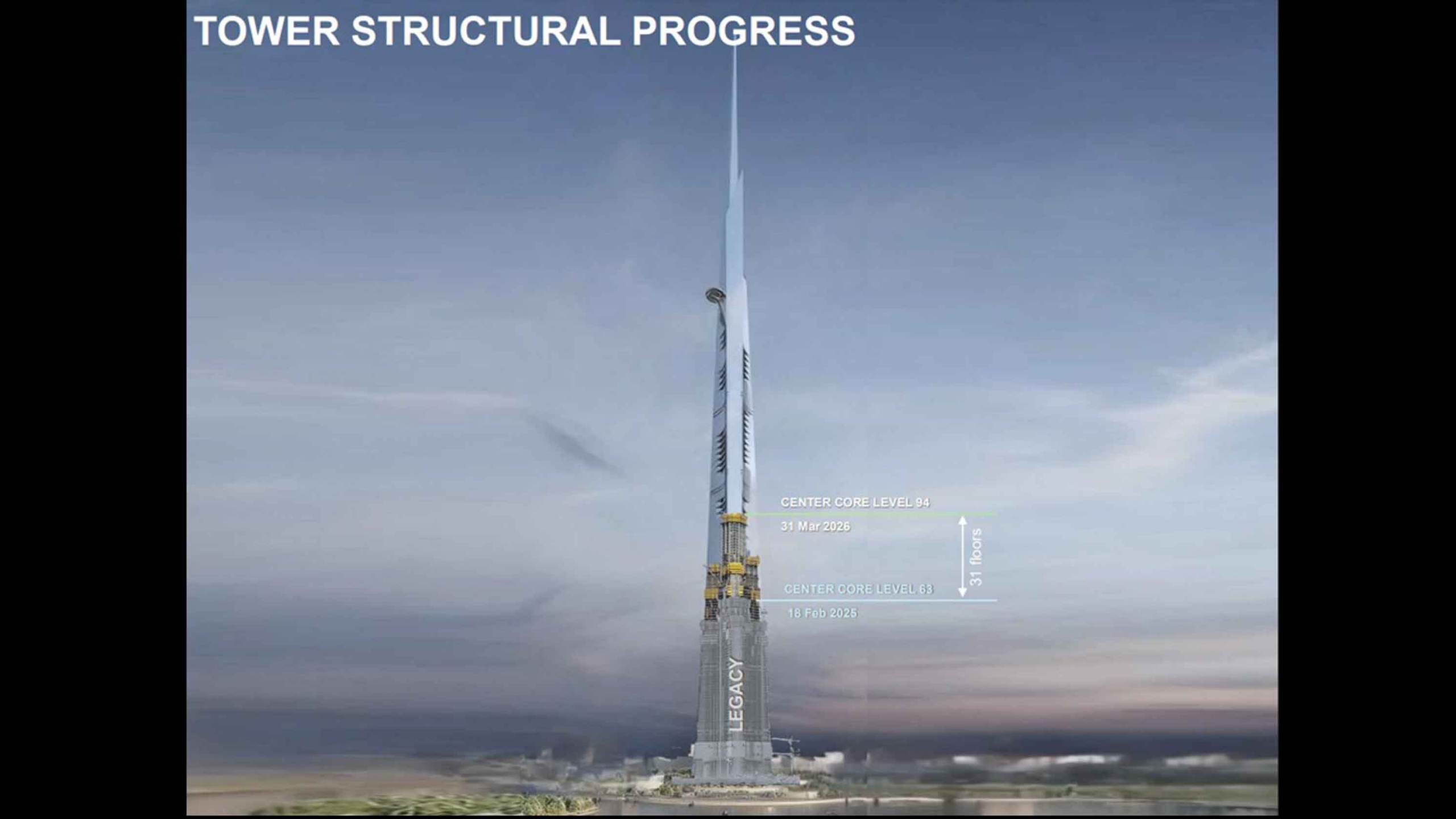
Construction logistics involve a delicate dance between the central core and the three wings. The center core typically advances ahead of the wings. We use a climbing formwork system that lifts itself up, adjusts, and continues the cycle.
- The “Legacy” Phase and Restarting Construction [59:52]
This project sat for a period, and we are now in what we call the “legacy” phase. We are building upon what was previously completed. Construction has restarted with high priority, focusing on moving the project toward completion.
- Current Progress and Sustainability Goals [01:03:10]
Current work involves incredible amounts of rebar and the complex logistics of the spire. We are also focused on sustainability; the building is designed for a 43 percent reduction in energy use compared to its baseline. It features a gray water collection system to provide irrigation for the landscaping without using potable water. Thank you all very much.
Q&A Session Highlights
Q: Have there been any deaths on site? Speaker: Not that I’m aware of, certainly not since the restart. The safety record is currently excellent and posted on-site.
Q: Are there women working on the project? Speaker: Yes! Especially in the offices. Young, Western-educated Saudi women are currently the hungriest, most enthusiastic workforce in the country. The place has changed 180 degrees. They’re even talking about liquor stores in the hotels now—the country is opening up rapidly.
Q: What is the design life of the building? Speaker: Nominally 100 years, but it will be around much longer than that. You just need a number that is “insurable.”
Q: Is there any “Green Tech” in the tower? Speaker: It wasn’t a primary driver for this client. However, because the air is thinner and colder at the top (1km up), it takes 40% less energy to cool the fresh air. It also has a gray-water collection system for irrigation. We studied putting wind turbines in the spire, but it didn’t generate enough “oomph” to be worth the cost.
Q: Can it resist a jet airliner? Speaker: You cannot design a skyscraper to resist a direct hit from a jet. It’s foolish to try. It will be a target, just as the Burj Khalifa is, but the strategy is based on the new economy and tourism cache. They want to win over the European vacation money that currently goes to Dubai.
Ben Johnson: Thank you! [Applause]